

 Thomas Unise
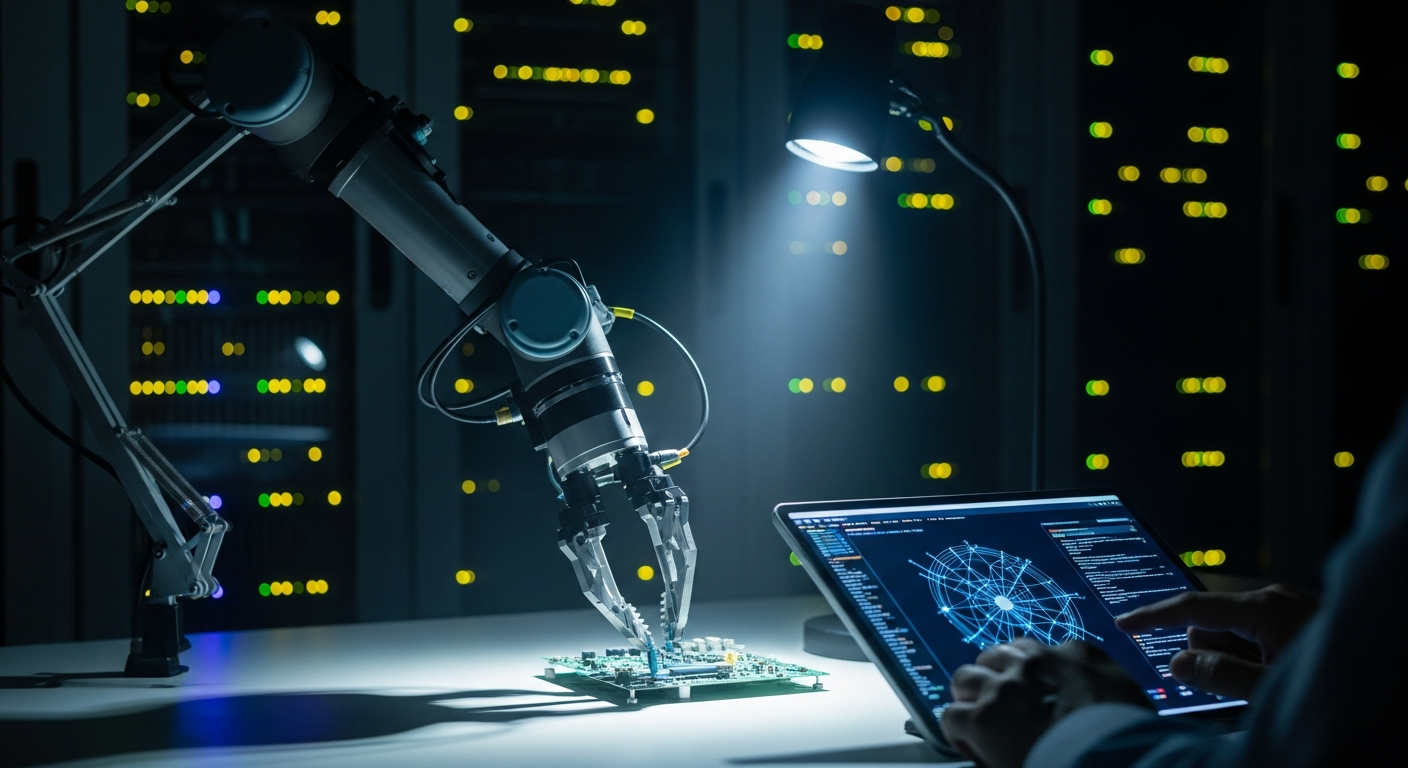
The International Federation of Robotics (IFR) has released a position paper highlighting how artificial intelligence is rapidly transforming robotics, moving advanced systems from research labs into real-world applications across multiple industries.
How AI is Enhancing Robot Capabilities
According to IFR President Takayuki Ito, AI integration is significantly enhancing robot capabilities, efficiency, and adaptability. The technology has evolved from merely supporting robotics to becoming a powerful enabler driving wider adoption across industries.
Key technological advancements include:
- Physical AI that allows robots to train themselves in virtual environments
- Deep learning for improved computer vision enabling object recognition and sorting
- Supervised learning for defect detection and quality inspection
- AI-powered SLAM (simultaneous localization and mapping) for navigation
- Reinforcement learning for motion planning and adaptive control
- Generative AI for simplified programming through natural language instructions
Global Competition Intensifies
The IFR notes significant regional differences in AI robotics development. In the United States, major corporations like Amazon, Tesla, and NVIDIA are making record investments, while venture capital flows into specialized robotics startups. Europe has seen strategic moves like ABB’s robotics division divestiture to Japan’s SoftBank Group. Meanwhile, China has announced a dedicated action plan to accelerate embodied AI as a critical component of its economic transformation.
Workforce Transformation
Rather than simply eliminating jobs, the IFR suggests AI in robotics will transform the nature of work over the next 5-10 years. While robots will continue taking over physically demanding tasks, new roles will emerge for supervising, analyzing, and decision-making. The organization predicts increased demand for AI engineers, data scientists, machine learning specialists, and ethics experts.
These positions will require digital and cognitive skills including coding, data literacy, critical thinking, and continuous learning. The IFR also acknowledges that AI robotics will affect team dynamics, decision-making processes, and performance monitoring, potentially improving workflows while raising concerns about employee surveillance and autonomy.
Future Outlook
The IFR expects widespread AI adoption in robotics applications within the next decade. These advanced systems promise greater efficiency, reduced errors, lower maintenance costs, and faster ROI compared to non-AI alternatives. The organization’s position paper also addresses macroeconomic trends affecting AI development and deployment, along with safety, security, and sustainability considerations.


GIPHY App Key not set. Please check settings