

 Thomas Unise
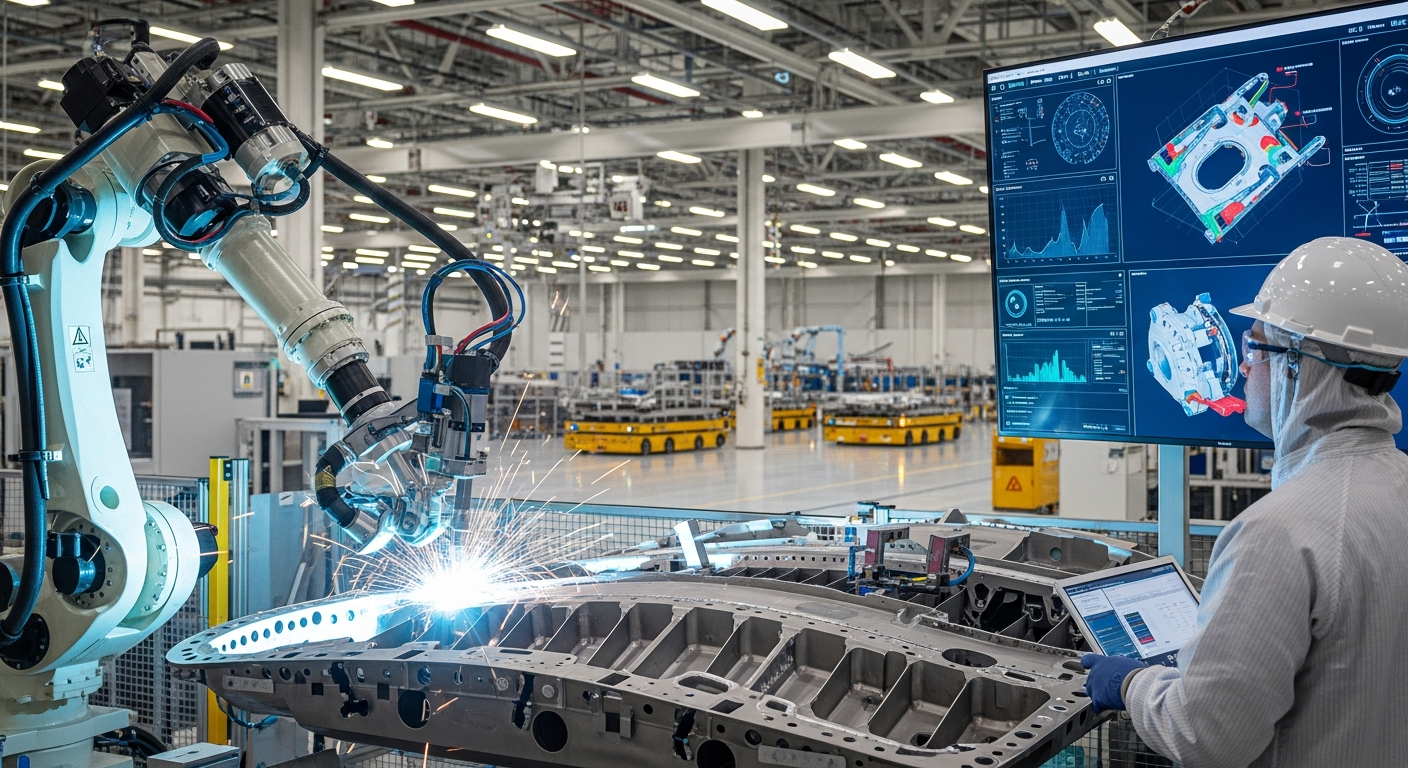
Elon Musk’s integration of xAI into SpaceX operations signals a transformative shift in automated manufacturing, particularly for aerospace. Rather than being implemented as an experimental project, AI is being embedded directly into core production processes to manage the increasing volume, speed, and complexity of rocket and satellite manufacturing.
Why AI is Becoming Essential in Advanced Manufacturing
The integration of AI into SpaceX’s operations is driven by necessity, as traditional manufacturing approaches cannot keep pace with the demands of modern aerospace production. AI provides critical capabilities to understand production behavior in real-time, detect issues before they escalate, and continuously improve processes without manual re-engineering.
Key Transformations in Manufacturing Automation
The SpaceX-xAI combination accelerates several important trends in industrial automation:
Adaptive Precision Manufacturing
Traditional high-precision factories rely on static, manually engineered recipes that are slow to adapt. AI-embedded systems will transform this approach by enabling robotic applications to adjust processing based on real-time feedback, adapt to material variations, predict quality during production, and optimize process windows dynamically.
Data Integration Advantage
SpaceX’s comprehensive production data—including machine telemetry, vision systems, process parameters, environmental conditions, quality results, and performance data—provides rich training material for AI systems. This vertically integrated environment creates meaningful, contextualized data that transforms AI from a reporting tool into a control and optimization engine.
Advanced Anomaly Detection
AI trained across multimodal production data will revolutionize anomaly detection by catching subtle process drift early, correlating patterns across operations, surfacing root causes quickly, and enabling digital testing of corrective actions before implementation. This leads to faster validation of new processes, shorter qualification cycles, reduced waste, and quicker production scaling.
Compliance-Driven AI Development
Aerospace manufacturing’s strict regulatory requirements will force the development of production-grade AI compliance and governance, including data lineage tracking, model versioning, explainable decisions, human oversight, and clear audit trails. This advancement will benefit industrial AI adoption across regulated industries.
Shift in AI’s Role in Manufacturing
The integration represents a fundamental shift from treating AI as an analytics add-on to incorporating it directly into automation control logic. AI will manage workflows across machines, coordinate factory-wide robotic cells, provide closed-loop control, trigger quality interventions, and orchestrate production in real time.
The Future of Autonomous Manufacturing
The SpaceX-xAI combination accelerates the timeline for autonomous manufacturing by connecting three critical AI layers: physical AI (embodied in robots and equipment), edge AI (real-time inference and process coordination), and industrial AI (plant-level orchestration and fleet-wide learning).
This integration will likely drive standardized interoperability for real-time data architectures, embed AI directly into production processes, create software-defined automation layers, replace static recipes with closed-loop feedback systems, and establish digital thread compliance for continuous learning.
Practical Impact
The immediate outcome will be the rapid deployment of advanced AI in demanding factory environments where precision, reliability, safety, and scale are paramount. This will produce better AI architectures for industrial robotics, stronger data contextualization, practical governance frameworks, and closed-loop manufacturing autonomy.
The factories of the future won’t just be automated—they’ll be autonomous, with intelligent systems continuously learning, self-optimizing, and orchestrating production through AI-enabled, software-defined automation.


GIPHY App Key not set. Please check settings