

 Thomas Unise
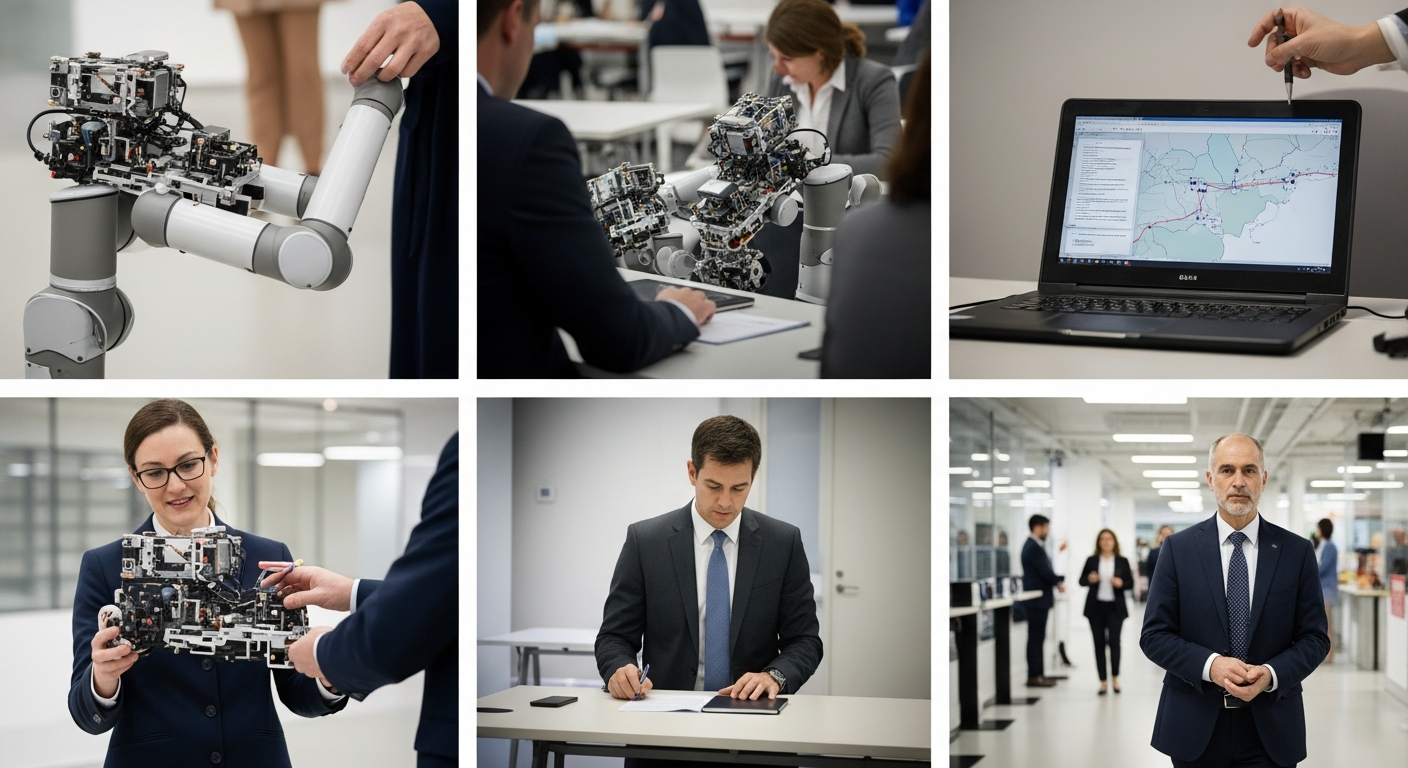
The robotics industry stands at a pivotal moment as regulation, particularly the European Union’s Artificial Intelligence Act, is forcing a shift away from opaque neural networks toward transparent, physics-based artificial integrated cognition (AIC) architectures. This summary explores why AIC represents the only viable path forward for certified robotic systems in regulated environments.
The ‘Blind Giant’ Problem of Black-Box AI
Current end-to-end neural network models in robotics create what the author calls the “blind giant problem” – systems with impressive capabilities but no ability to explain their decision-making processes. These black-box models:
- Cannot explain their decisions
- Fail to guarantee bounded behavior
- Provide no forensic accountability after incidents
- Compress perception, cognition, and action into a single opaque function
- Prevent isolation of failure modes
These limitations make such systems fundamentally incompatible with high-risk, regulated robotic deployments where certification is required.
Artificial Integrated Cognition: A Certification-Compatible Alternative
AIC offers a different paradigm built on:
- Physics-driven dynamics
- Functional modularity
- Continuous internal observability
Unlike end-to-end neural networks, AIC systems expose their internal state, coherence, and confidence before acting. This transparency makes them inherently compatible with certification frameworks required by regulations like the EU AI Act.
From Learning to Knowing
AIC replaces blind optimization with reflective control. Rather than simply maximizing rewards, AIC systems evaluate whether actions are coherent, stable, and explainable given their current internal state. This internal observer enables functional accountability that regulators demand.
Why Regulators Prefer Physics Over Statistics
Regulatory bodies inherently trust systems based on:
- Equations and mathematical bounds
- Deterministic behavior under constraints
- Formal verification paths
- Predictable degradation
- Clear responsibility chains
Physics-based cognitive architectures provide these features in ways that statistical black-box models cannot, making them more likely to receive regulatory approval.
Commercial Implications
The article suggests a profound commercial reality: the most impressive robots of today may never reach the market if they cannot be certified. Performance demonstrations alone will not determine market success – certification will. Systems designed with explainability as a core feature will ultimately dominate in regulated environments, regardless of how visually impressive their competitors might be.
Conclusion
The future of robotics will belong to intelligent systems that can be trusted, explained, and certified. Artificial Integrated Cognition represents not just an alternative approach but potentially the only viable path forward for robotics in regulated environments. As the author states, “The era of blind giants is ending. The era of accountable intelligence has begun.”



GIPHY App Key not set. Please check settings