

 Thomas Unise
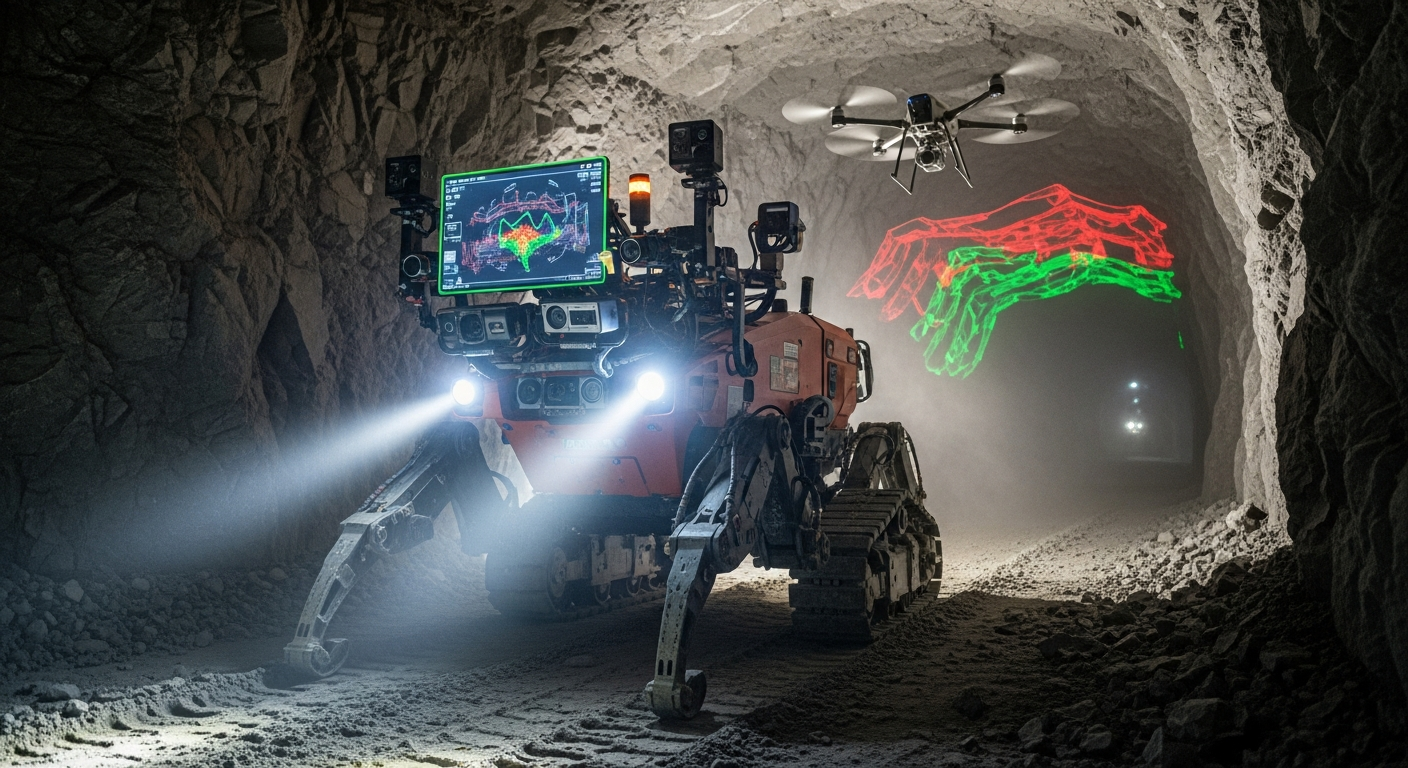
Australian Droid + Robot (ADR) has partnered with Intel to deploy autonomous inspection robots that use edge AI to keep mining workers safe while gathering critical data in dangerous underground environments.
Revolutionizing Mining Safety with Edge Computing
As mining operations push deeper underground, the dangers to human workers increase significantly. ADR’s Explora robots, now equipped with Intel Xeon and Intel Core Ultra processors, can autonomously conduct inspections in these hazardous environments without requiring Wi-Fi or cloud connections.
The robots process massive amounts of data from 3D lidar, thermal cameras, and gas sensors in real-time, effectively operating as “mobile data centers” according to Mat Allan, ADR’s co-founder and CTO. This onboard computing power allows the robots to function efficiently in areas where traditional connectivity is impossible.
Addressing Critical Safety Challenges
Underground mining environments present numerous invisible dangers, including unstable ground, rockfalls, toxic blast fumes, excessive heat, and oxygen deprivation. Traditionally, humans had to physically enter these spaces to test for safety—creating a paradoxical risk situation.
The Explora robots break this cycle by entering first to check gas levels, scan for structural movements, or identify other hazards before human entry is permitted. This proactive approach ensures workers only enter environments that have been verified as safe.
Technical Capabilities and Performance
The robots can operate between four to twelve hours depending on mission requirements, balancing runtime against substantial computing needs. Intel’s architecture provides critical hardware-acceleration capabilities that allow efficient handling of intensive tasks without rapidly depleting battery power.
ADR’s AI systems are specifically designed to navigate unstructured, chaotic environments including mud, acidic water, abrasive dust, and uneven terrain. The robots can be configured for various inspection tasks:
- Using multi-gas sensors to detect toxic fumes after blasting
- Employing 3D lidar to scan walls for convergence or safety risks
- Utilizing thermal cameras to inspect conveyor belts for overheating components
- Serving as emergency response tools when situations become dangerous
Real-World Implementation
Far beyond the testing phase, ADR’s systems have been in active use by major mining companies including Rio Tinto and BHP for several years. At Rio Tinto, the robots regularly inspect conveyor belts and confined spaces, eliminating the need for operational shutdowns and human entry into dangerous areas.
The technology has evolved from simple remote control to true autonomy with advanced edge analytics, becoming a “business as usual” tool that saves hours of production time while enhancing worker safety.
Industry Focus and Future Applications
While the technology has potential applications in sectors like search and rescue or infrastructure inspection, ADR remains focused on mining. This industry presents the most challenging environment—with heat, dust, mud, and water—making it the ultimate proving ground for robotic systems.
By solving these extreme challenges in mining first, ADR is saving lives and recovering millions in lost production time before potentially expanding to other industries.
Conclusion
The collaboration between Intel and ADR represents a significant advancement in applying edge AI and autonomous robotics to industrial safety challenges. By bringing powerful computing capabilities directly to hazardous environments, these robots are transforming safety protocols in mining operations while demonstrating how edge computing can function effectively in the most demanding conditions on Earth.



GIPHY App Key not set. Please check settings