

 Thomas Unise
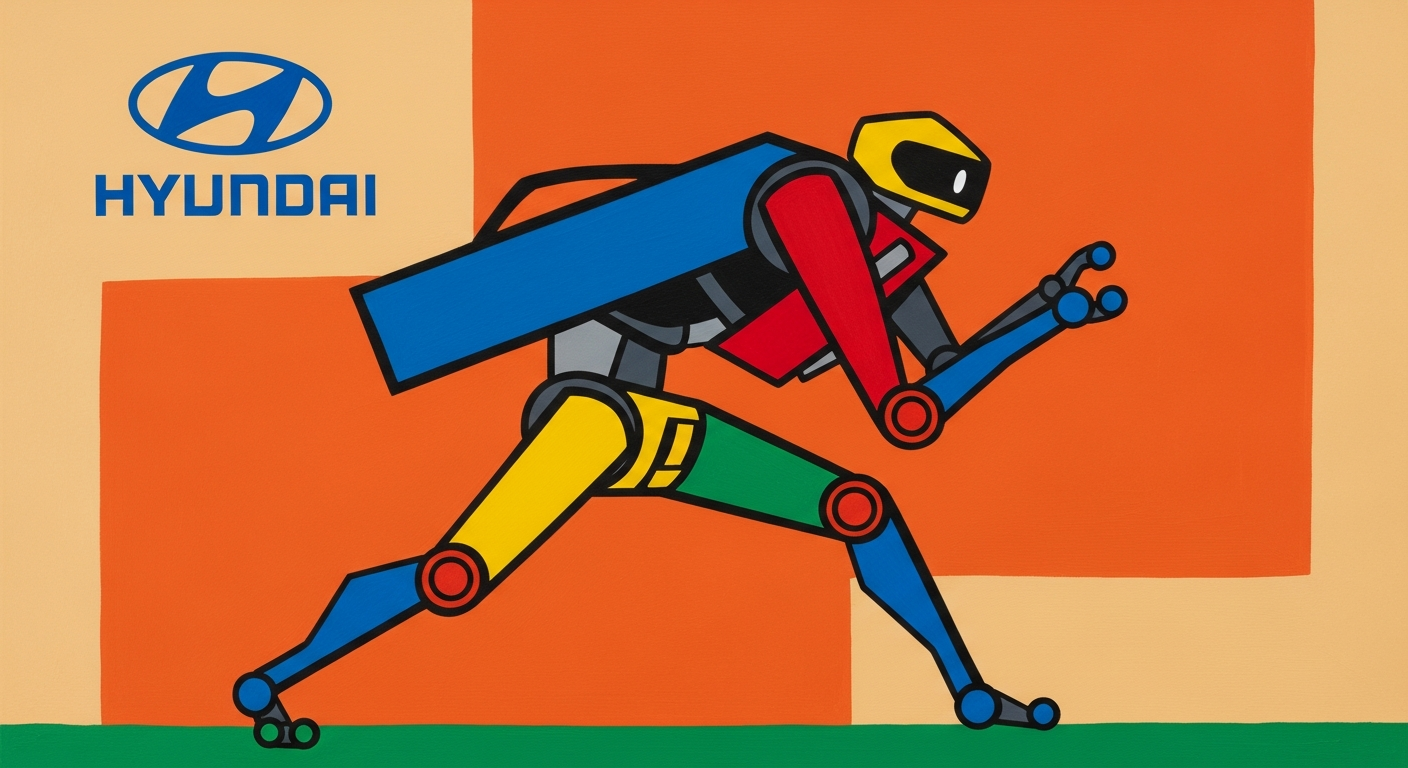
Boston Dynamics showcased its Atlas humanoid robot performing real factory tasks at a Hyundai plant in Georgia during a recent 60 Minutes segment, highlighting significant advancements in AI-powered robotics and the growing competition in the humanoid market.
Atlas Steps Out of the Lab
For the first time, Atlas was shown outside of laboratory conditions, sorting roof racks autonomously at Hyundai’s new automotive facility near Savannah, Georgia. This milestone represents a significant step in Boston Dynamics’ journey to create commercially viable humanoid robots capable of performing meaningful work in industrial settings.
Since CBS correspondent Bill Whitaker’s previous visit to Boston Dynamics in 2021, Atlas has evolved from a hydraulic system to an electric version with enhanced capabilities, including a three-fingered gripper with tactile sensing. The robot’s design allows for superhuman motion through fully rotational joints unimpeded by wires.
AI Learning Through Demonstration
Rather than traditional programming, Atlas and other AI robots learn through a combination of human demonstration and simulation:
- Teleoperators perform tasks multiple times to generate training data
- Motion-capture suits allow humans to teach Atlas movements directly
- Data from a single training session can train 4,000 virtual robots in just six hours
- NVIDIA’s AI processors and GR00T framework help the systems understand the real world
Scott Kuindersma, VP of robotics research at Boston Dynamics, explained that even failures provide valuable learning opportunities to improve the system.
Market Growth and Competition
The humanoid robot market is heating up with significant investment and competition:
- Goldman Sachs predicts the humanoid market could reach $38 billion by 2035
- Approximately $4.6 billion was invested in humanoid developers in 2025
- Chinese startups with state funding pose serious competition
- Hyundai acquired Boston Dynamics for $880 million in 2021
- Hyundai plans to deploy “tens of thousands” of robots from Boston Dynamics
Robert Playter, CEO of Boston Dynamics, expressed concern about the competitive landscape: “The Chinese government has a mission to win the robotics race. Technically, I believe we remain in the lead. But there’s a real threat there that — simply through the scale of investment — we could fall behind.”
The Future of Work with Humanoids
While humanoid robots are advancing rapidly, they’re not yet ready for mass deployment. Current challenges include making them reliable, affordable, and capable of more complex tasks like putting on clothes or carrying beverages while walking.
Playter acknowledged that humanoid robots will change the nature of work but emphasized they would primarily take over repetitive or dangerous tasks. He also noted that these robots will still require human management, building, training, and servicing.
Hyundai’s new automotive plant in Georgia, which already employs nearly 1,500 people and uses more than 1,000 industrial robots, provides a glimpse into this collaborative future where humans and humanoid robots work alongside each other.
What’s Next
Hyundai planned to discuss its AI robotics strategy and publicly showcase Atlas for the first time at CES in Las Vegas, marking another step in the company’s “great journey” into advanced robotics, according to Heung-soo Kim, head of global strategy at Hyundai.


GIPHY App Key not set. Please check settings