

 Thomas Unise
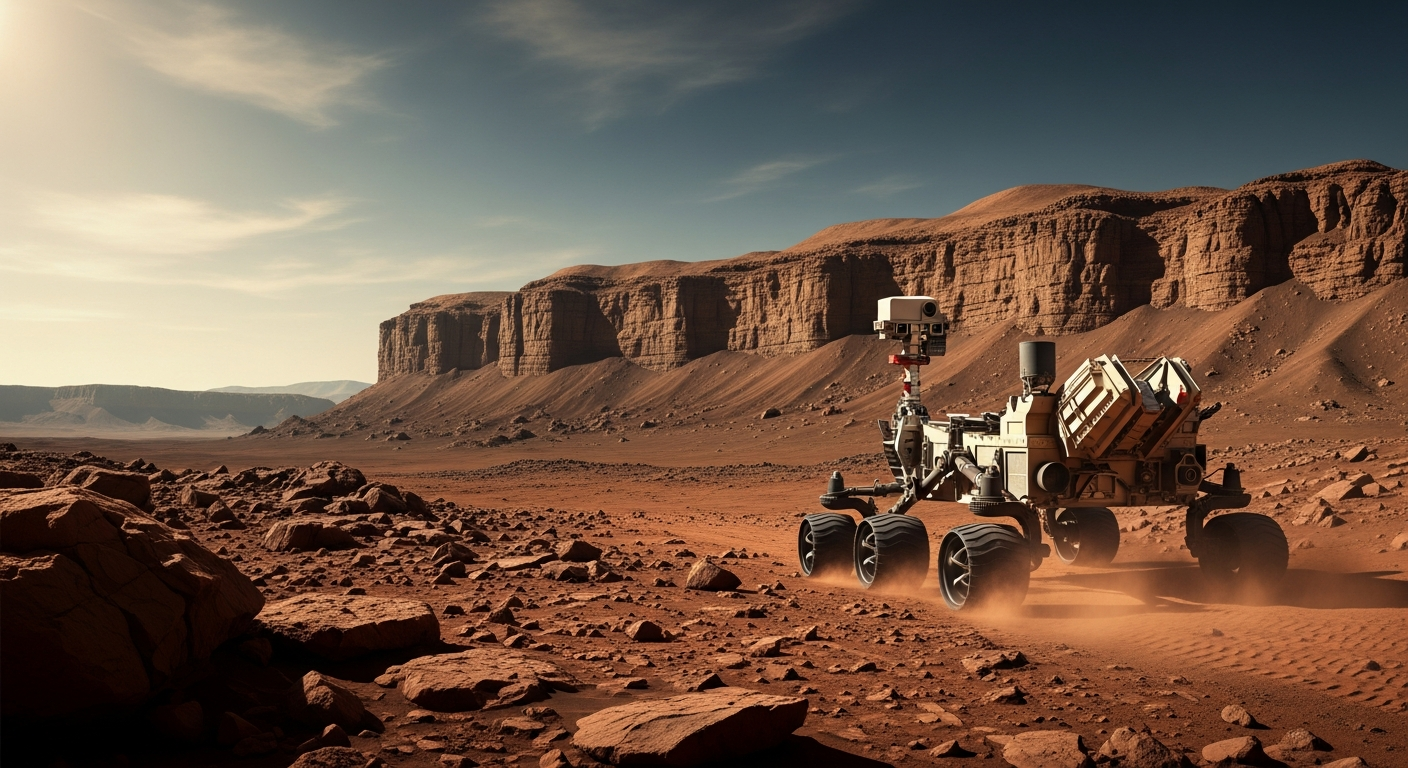
NASA’s Perseverance rover has achieved a remarkable milestone on Mars, traveling 1,350.7 feet (about a quarter mile) in a single Martian day through its autonomous navigation system.
Mars Rover’s Impressive Autonomous Journey
On June 19, 2025, the Perseverance rover completed its record-breaking trek over the course of four hours and 24 minutes. This represents the longest distance any Mars explorer has traveled in a single Martian day, or “sol.” What makes this achievement particularly impressive is that the rover accomplished this feat largely on its own.
While human scientists at NASA’s Jet Propulsion Laboratory (JPL) select the rover’s destinations, the robot’s sophisticated navigation software determines the actual path. This autonomy is crucial given the communication delay between Earth and Mars, which can be over 20 minutes each way.
Enhanced Navigation Technology
The rover’s success relies on a system called Enhanced Autonomous Navigation (ENav), which can scan for potential obstacles up to 50 feet ahead—farther than previous Mars robots—and automatically plan routes around them. According to Hiro Ono, JPL autonomy researcher, more than 90 percent of Perseverance’s journey has utilized autonomous driving, enabling efficient sample collection across diverse Martian terrain.
NASA released a video capturing this epic journey, combining images taken by the rover’s navigation cameras with virtual frames reconstructed from the rover’s data.
Broader Achievements and Future Implications
This distance record coincides with another milestone for Perseverance: after nearly five years exploring Mars, the rover has traveled almost 25 miles in total. Scientists hope it will continue for at least another 37 miles with the help of its autonomous software.
The implications extend beyond current missions. As Ono noted, “As humans go to the Moon and even Mars in the future, long-range autonomous driving will become more critical to exploring these worlds.” The technology being perfected on Perseverance today is laying groundwork for future human exploration of other planetary bodies.
Conclusion
Perseverance’s record-setting autonomous drive demonstrates the remarkable progress in robotic space exploration. By combining human oversight with increasingly sophisticated autonomous systems, NASA continues to push the boundaries of what’s possible in planetary exploration, even from over a hundred million miles away.



GIPHY App Key not set. Please check settings