

 Thomas Unise
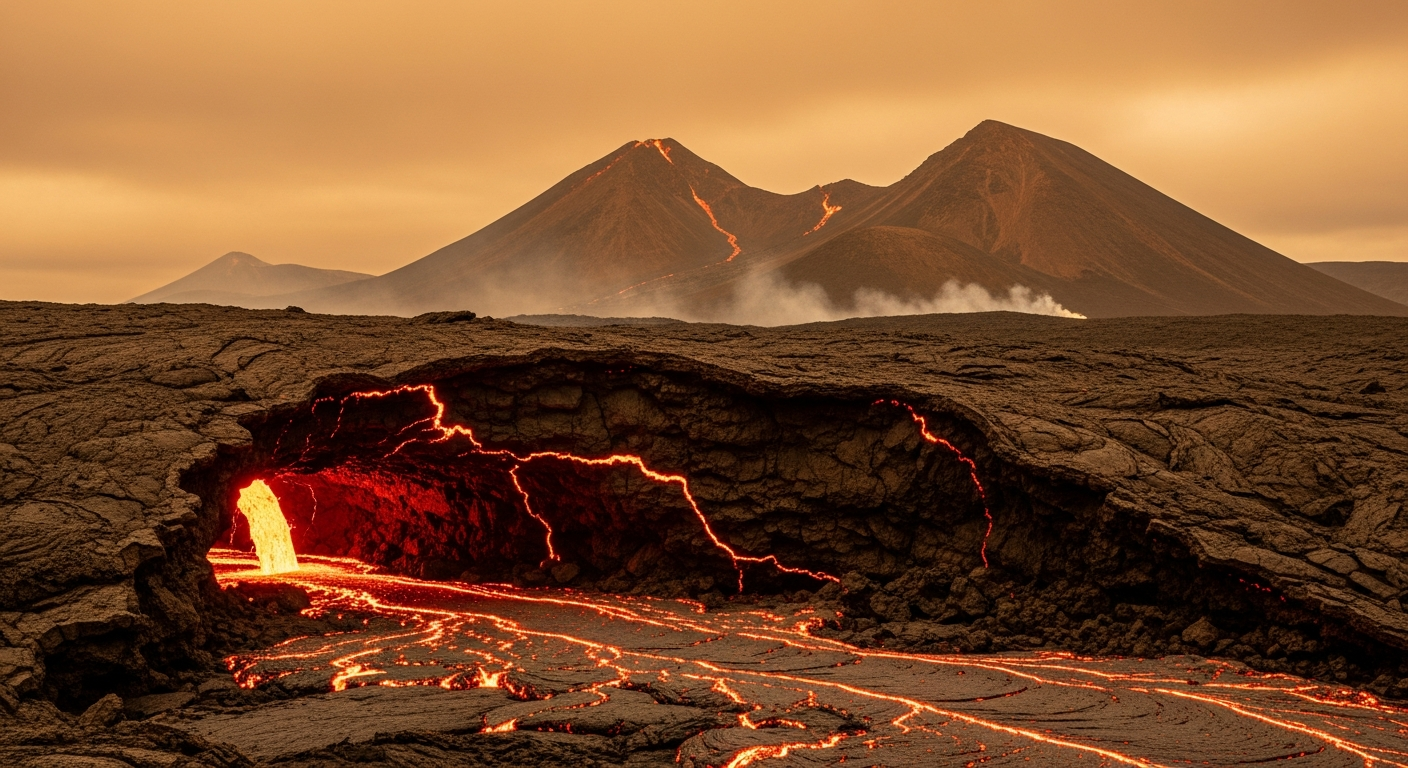
Astronomers from the University of Trento have uncovered compelling evidence of a massive cave system beneath the surface of Venus, providing the strongest indication yet that the planet contains extensive lava tubes. This groundbreaking discovery, published in Nature Communications, significantly enhances our understanding of Venus’ volcanic history.
Key Discovery Details
The research team, led by Lorenzo Bruzzone, identified a large subsurface conduit in the Nyx Mons region—a shield volcano approximately 225 miles wide. What makes this finding particularly remarkable is the estimated size of the lava tube, with a diameter of around one kilometer, exceeding the dimensions of similar structures found on Earth and Mars.
Scientists have long theorized about the existence of lava tubes on Venus, given the planet’s estimated tens of thousands of volcanoes and extensive volcanic plains. However, direct evidence had remained elusive until now, partly due to the challenges of observing Venus’ surface through its dense, sulfuric cloud cover.
Innovative Research Methods
Rather than conducting new observations, the researchers analyzed existing data collected by NASA’s Magellan spacecraft between 1990 and 1992. The spacecraft’s Synthetic Aperture Radar (SAR) technology had penetrated Venus’ thick atmosphere, producing detailed backscattering maps of the surface.
The team developed specialized imaging techniques to detect underground conduits near skylights—holes formed when lava tube roofs collapse. This methodical approach allowed them to identify what appears to be an extensive lava tube system.
Implications and Future Research
While the team could only confirm and measure the portion of the cavity close to the skylight, analysis of the surrounding terrain suggests the subsurface conduits may extend for at least 45 kilometers. This aligns with scientists’ predictions about Venus’ volcanic formations.
The discovery provides crucial validation for long-held theories about Venus’ geological history and volcanic activity. To further explore these findings and potentially identify additional lava tubes, researchers will need new higher-resolution images and data from radar systems capable of penetrating the Venusian surface.
Venus’ Challenging Environment
Venus presents extraordinary challenges for surface observation, with temperatures exceeding 870 degrees Fahrenheit and a permanent shroud of thick clouds composed of sulfur and carbon dioxide. These conditions make optical observations virtually impossible, highlighting the significance of radar-based discoveries like this one.
This finding adds to recent studies indicating signs of recent volcanic activity on Venus, further establishing volcanism as a dominant force in shaping the planet often described as Earth’s twin.



GIPHY App Key not set. Please check settings