

 Thomas Unise
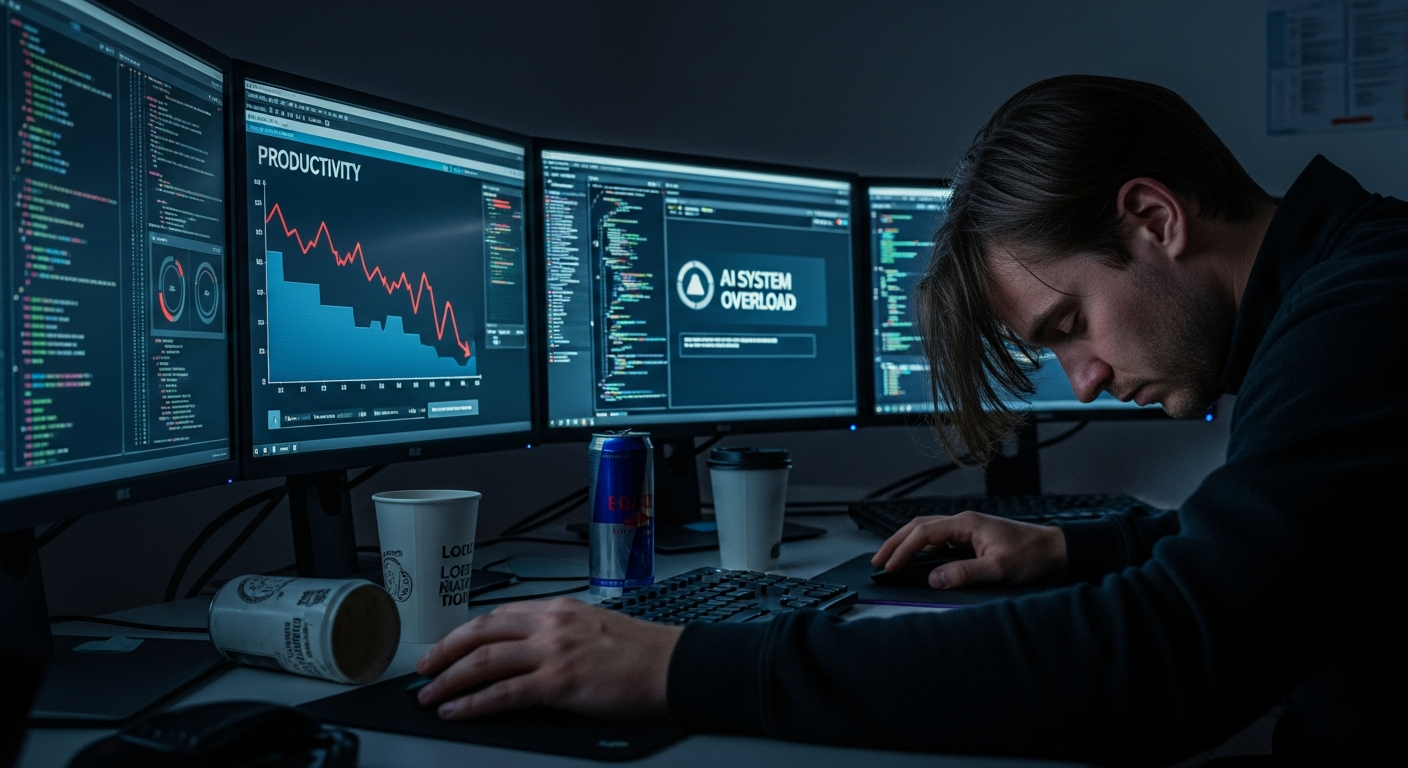
Software engineers are discovering that while AI tools boost their productivity, they’re simultaneously pushing them toward burnout in what’s becoming known as the “AI productivity paradox.”
The Hidden Cost of AI-Enhanced Productivity
Siddhant Khare, a programmer interviewed by Business Insider, reported shipping more code than ever before while feeling increasingly drained. His experience highlights how AI is transforming the nature of programming work—engineers are becoming reviewers in an “never-ending assembly line” of code generation rather than creators.
The paradox, as Khare explains it, is that while AI lowers production costs, it significantly increases the human burden of “coordination, review, and decision-making.” This shift fundamentally alters the work experience for many developers.
Research Confirms the Trend
A study reported in Harvard Business Review supports these observations. Researchers monitoring 200 employees at a US tech company found that AI was intensifying workloads rather than reducing them. This created a vicious cycle where:
- AI accelerated certain tasks, raising speed expectations
- Higher speed increased reliance on AI tools
- Increased reliance widened the scope of attempted work
- Wider scope expanded both quantity and density of work
The Multitasking Trap
Before AI, Khare would spend entire days in “deep focus” on a single problem. Now, he might handle six different problems in a day—each one supposedly “only takes an hour with AI.” However, the mental cost of context-switching between multiple problems creates significant cognitive strain that the AI doesn’t experience.
This pattern of increased multitasking was also observed in the research study, with employees reporting they were “always juggling” rather than focusing on one task at a time.
Skill Atrophy Concerns
Khare raises another concern: dependency on AI may lead to skill regression. He compares it to GPS navigation—after years of reliance, people lose their ability to navigate without it as the skill atrophies from disuse.
Finding Balance
Despite these challenges, Khare isn’t advocating against AI use. Instead, he believes in finding healthier ways to incorporate AI tools into workflows and suggests that AI companies should implement “guardrails for humans, so they don’t self-destruct themselves.”
The emerging picture suggests that while AI can dramatically increase output, organizations and individuals need to develop new strategies to prevent the technology from overwhelming human workers instead of supporting them.

GIPHY App Key not set. Please check settings