

 Thomas Unise
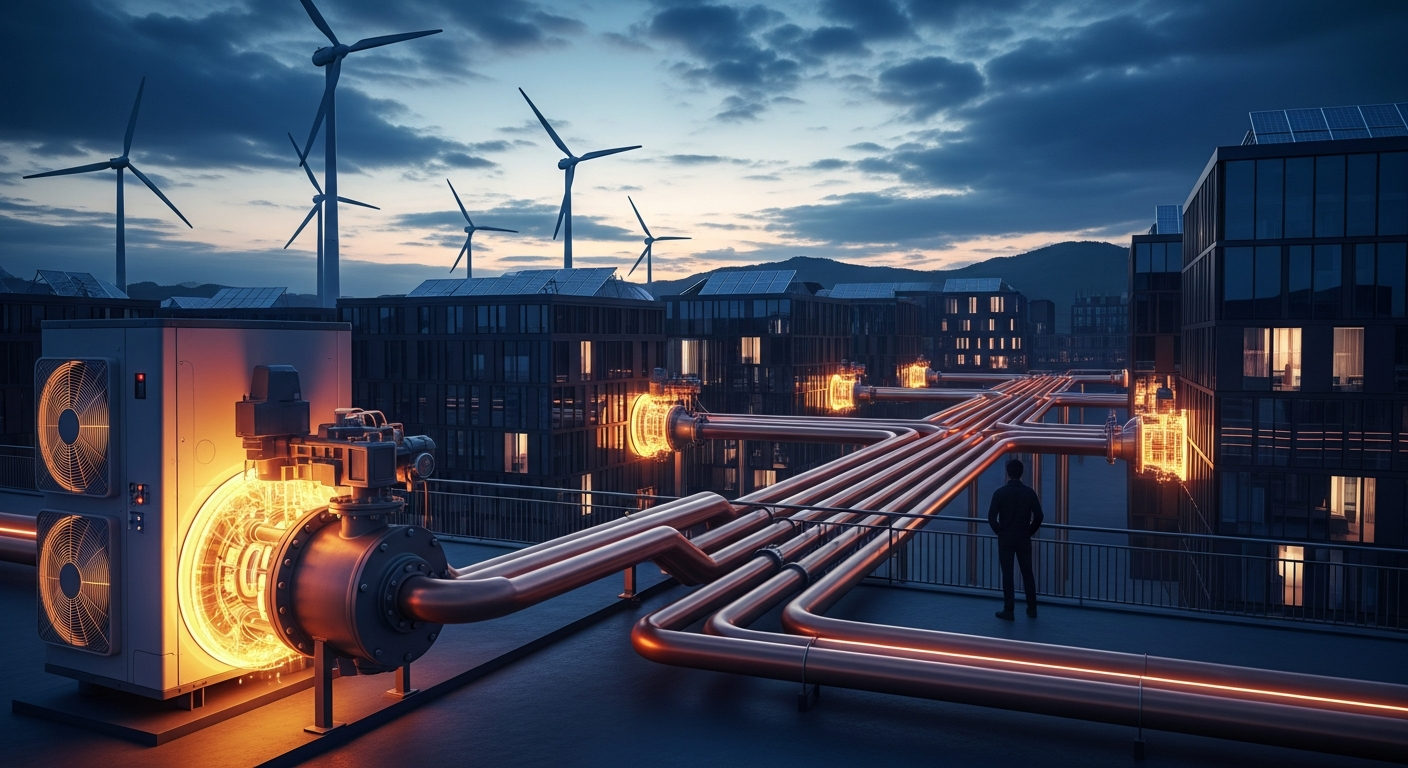
German energy company MVV Environment is developing what could become the world’s most powerful heat pumps, harnessing the Rhine River to provide heating for 40,000 homes in a groundbreaking clean energy initiative.
The Rhine River Heat Pump Project
The Rhine River, Western Europe’s second-longest river, represents an enormous untapped resource for clean energy. MVV’s project involves constructing two massive heat pumps that will extract thermal energy from the Rhine’s waters and distribute it to thousands of homes through district heating networks.
These industrial-scale heat pumps function similarly to residential units but at a vastly larger scale. They extract heat from external sources (in this case, river water), then use compressors, refrigerants, coils, and fans to efficiently transfer that energy for heating or cooling purposes.
Key Benefits and Potential Impact
The advantages of this approach are significant:
- Heat pumps are substantially more energy-efficient than traditional heating methods like gas boilers
- The project represents a symbolic transition from fossil fuels to renewable technology, as the pumps will be built on a former coal power plant site in Mannheim
- The existing site is already connected to both the electrical grid and local district heating network
- According to the International Energy Agency, district heating could potentially meet up to 50% of Europe’s heating demand
Part of a Broader European Trend
This initiative joins several similar projects across Europe leveraging heat pump technology:
- Aalborg, Denmark is developing a comparable system
- The UK is extracting heat from water in abandoned mines
- Helsinki, Finland already harvests heat from ambient air for district heating
Challenges and Timeline
Despite the environmental benefits, cost remains a significant obstacle. The Mannheim heat pumps come with a substantial $235 million price tag. Construction is expected to begin next year with completion anticipated within 2-3 years.
The technology benefits from previous development work by the oil and gas industry, which has already refined much of the necessary compressor technology.
Conclusion
MVV’s Rhine River heat pump project represents an innovative approach to sustainable heating that could serve as a model for similar initiatives worldwide. While expensive, such large-scale renewable heating solutions offer a promising path toward reducing carbon emissions from residential heating while utilizing natural resources in environmentally responsible ways.



GIPHY App Key not set. Please check settings