

 Thomas Unise
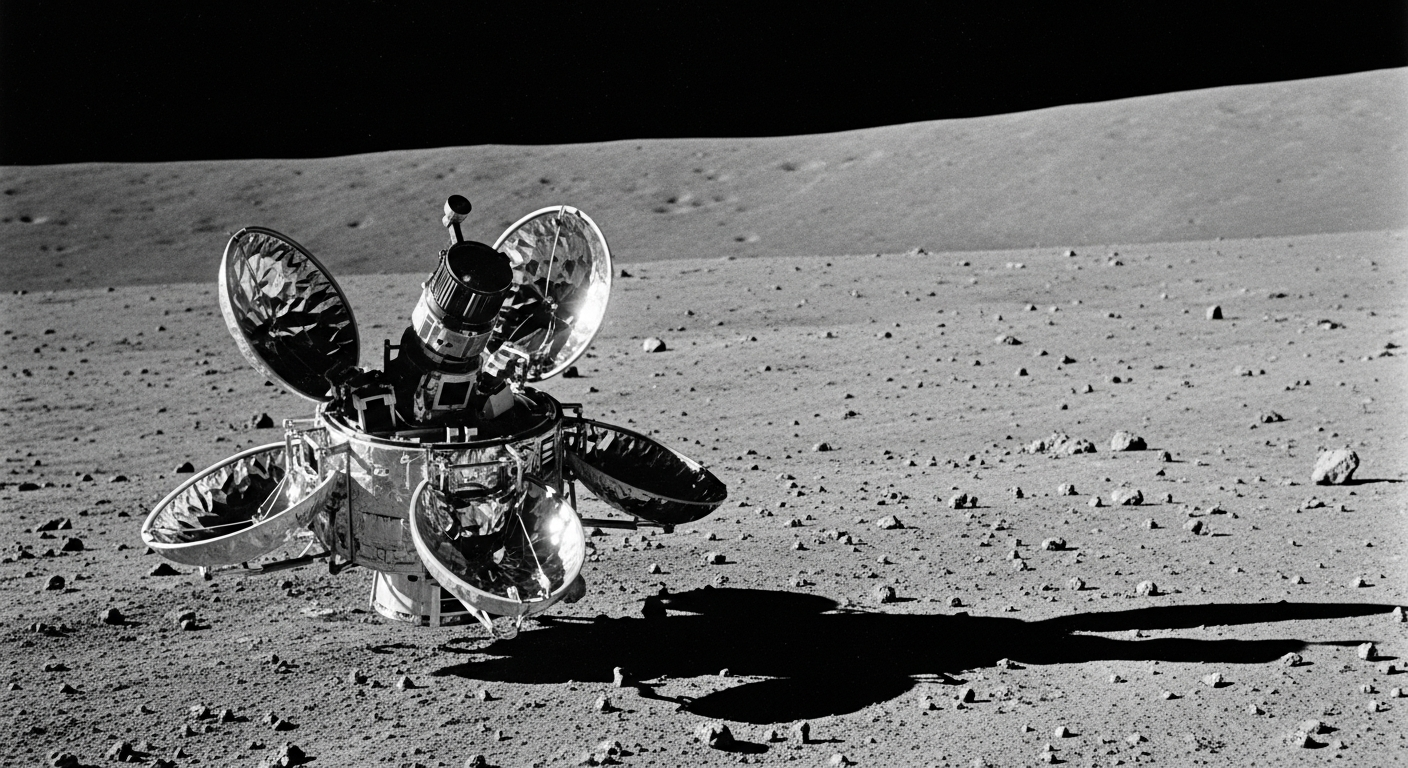
In 1966, the Soviet Union made history when Luna 9 became the first spacecraft to achieve a soft landing on the Moon and transmit the first photos from another celestial body. However, the exact location of this beach ball-sized probe has remained a mystery for nearly six decades.
The Search for a Tiny Space Relic
Two separate research teams have recently claimed to have found the historic Soviet lander, but they disagree on its precise location. The challenge in locating Luna 9 stems primarily from its small size—the spherical core measures just two feet in diameter, making it extremely difficult to spot even with advanced satellite imagery.
Mark Robinson, who leads the camera team for NASA’s Lunar Reconnaissance Orbiter, explained to the New York Times that Luna 9 is simply too small for current satellites to definitively identify. “You can stare at an image, and maybe that’s it, but you can’t really know for sure,” he noted.
Two Competing Discoveries
Science communicator Vitaly Egorov organized a crowdsourcing effort to scan a 62-mile-wide region of the lunar surface for any unusual signs. After studying horizon features visible in Luna 9’s original grainy photographs, Egorov believes he has found the lander’s final resting place, though he acknowledges there could be “an error of several meters.”
Meanwhile, researchers at University College London have identified a different potential landing site. Their team developed a machine-learning algorithm called “You-Only-Look-Once–Extraterrestrial Artefact” (YOLO-ETA), trained on NASA data from known lunar landing sites. Their analysis identified a bright pixel near two darker spots that could be Luna 9’s protective shells used during landing.
Resolution on the Horizon
The mystery may soon be resolved as India’s space agency has agreed to use its higher-resolution Chandrayaan-2 satellite to investigate the area in March. This could finally settle the debate about Luna 9’s location after more than 50 years of speculation.
Russian spaceflight expert Anatoly Zak expressed optimism that technological advances will eventually reveal the locations of Luna 9 and its twin, Luna 13. “It’s just a matter of placing bigger and better cameras into orbit around the moon,” he told the New York Times. “In our lifetimes, we probably will see those sites.”
Why It Matters
Locating Luna 9 is more than just a historical curiosity. As humanity returns to the Moon with new missions, understanding and preserving these early landing sites becomes increasingly important for documenting our space exploration heritage. The search for Luna 9 represents one of the longest-running treasure hunts in space exploration history, connecting our current lunar ambitions with the pioneering achievements of the Space Race era.

GIPHY App Key not set. Please check settings