

 Thomas Unise
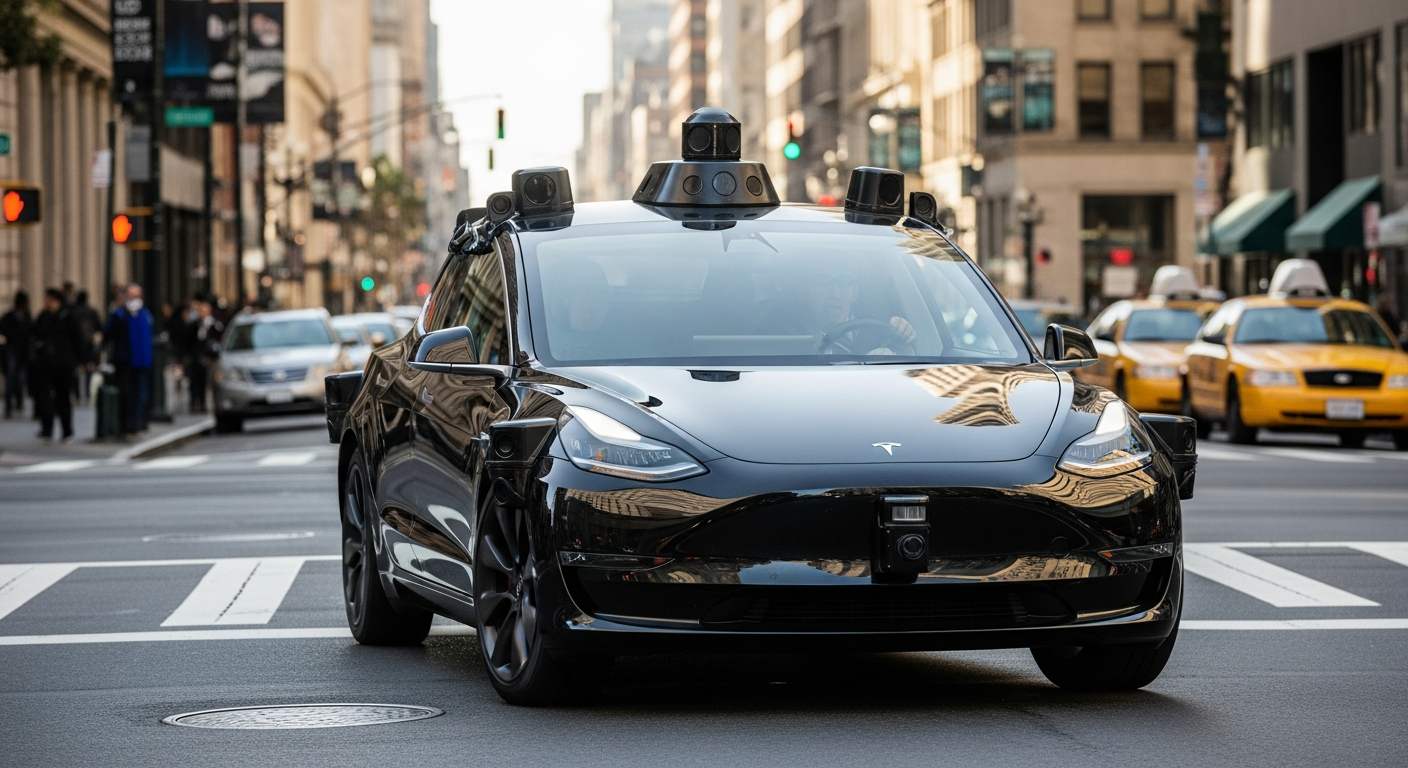
Tesla’s Robotaxi service is experiencing a concerning safety record, with crash rates far exceeding both human drivers and competitors like Waymo, according to updated National Highway Traffic Safety Administration (NHTSA) filings.
Key Safety Concerns
Tesla has reported an additional five crashes involving its Robotaxis, bringing the total to 14 documented collisions since the service launched in Austin, Texas in June 2025. The newly reported incidents occurred between December 2025 and January 2026, involving collisions with fixed objects, a bus, a truck, and two incidents where Tesla vehicles backed into poles or trees.
Based on mileage data from Tesla’s Q4 2025 earnings, the Robotaxi fleet has accumulated approximately 800,000 miles, resulting in a crash rate of once every 57,000 miles. This is four times worse than the average American driver, who experiences a minor collision every 229,000 miles according to Tesla’s own Vehicle Safety Report.
Comparison to Competitors
The safety record appears even more problematic when compared to Waymo, Tesla’s main competitor in the autonomous driving space. Waymo averages an accident approximately every 98,000 miles across over 127 million fully driverless miles. Several factors make this comparison even less favorable for Tesla:
- Waymo operates over 2,000 robotaxis compared to Tesla’s fleet of less than 50
- Waymo serves several major US cities while Tesla is limited to a small area of Austin
- Waymo vehicles are fully driverless without human monitors inside or outside
Reporting Discrepancies
The NHTSA filings also revealed troubling reporting practices by Tesla. A July 2025 crash initially reported as causing only property damage was quietly revised in December to indicate a “Minor W/Hospitalization” injury – a delay of nearly six months in properly reporting that someone was injured.
This isn’t an isolated incident. The NHTSA previously launched an investigation into Tesla for repeatedly failing to report crashes in a timely manner. Additionally, Tesla heavily censors its crash reports by redacting crucial details like crash narratives under the guise of protecting “confidential business information” – a practice not followed by other robotaxi companies.
Implications
The data raises serious questions about Tesla’s autonomous driving technology and its readiness for public deployment. While the company continues to promote its Robotaxi service as revolutionary, the safety statistics suggest the technology may not yet be living up to its promise of being safer than human drivers – the fundamental value proposition of autonomous vehicles.

GIPHY App Key not set. Please check settings