

 Thomas Unise
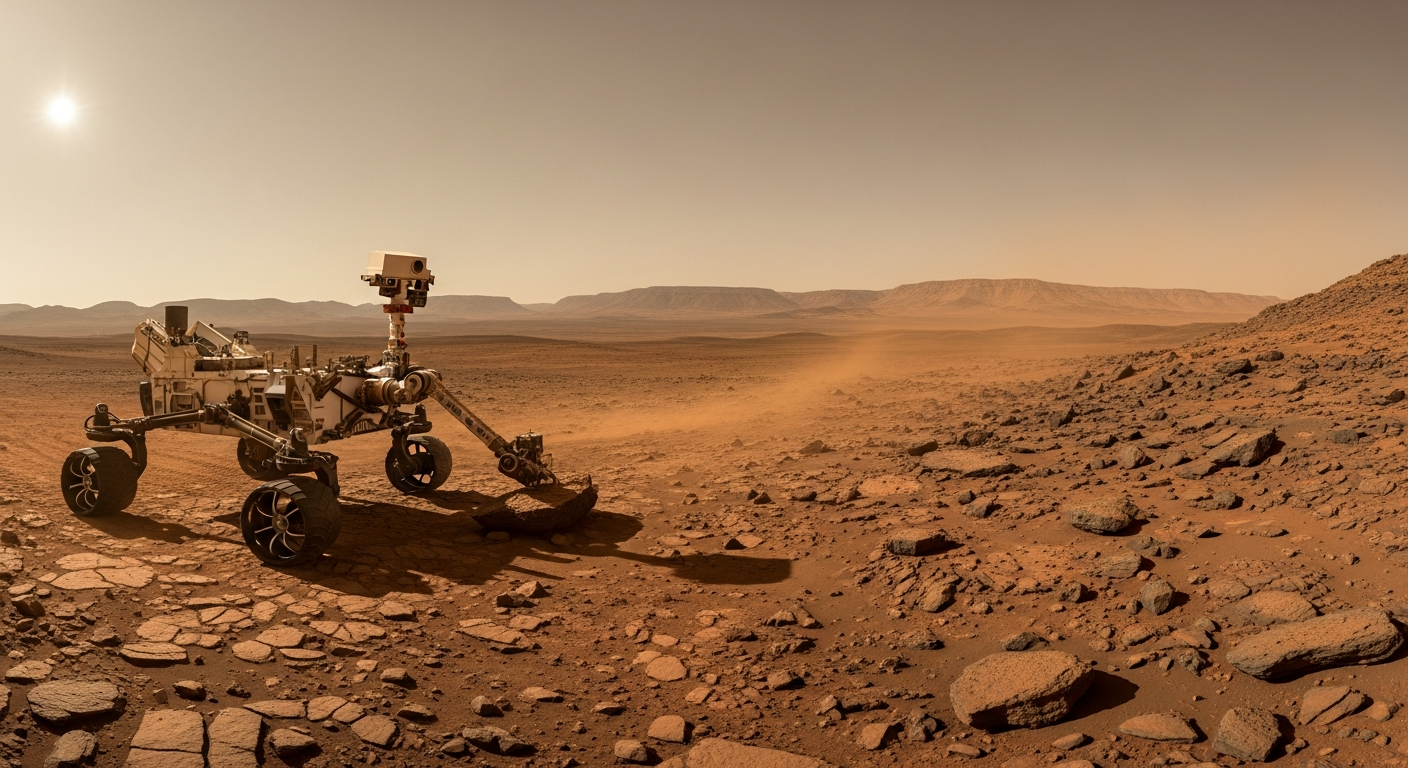
NASA’s Curiosity rover has revealed fascinating details about nighttime on Mars, where conditions mirror Earth in some ways but remain distinctly alien in others.
Mars Nights: Familiar Yet Foreign
The Martian night cycle shares similarities with Earth, lasting just over 12 hours on average with seasonal variations. However, nighttime temperatures on the Red Planet plummet dramatically, reaching as low as -100 degrees Fahrenheit near the equator. Without artificial light pollution, the night sky displays familiar star constellations against complete darkness.
Curiosity’s Nighttime Operations
To navigate and study Mars during darkness, the Curiosity rover utilizes LED lights mounted on its robotic arm. A recent image from December 6 showcased these lights illuminating a drill hole in a rock formation called “Nevado Sajama” – creating an eerie glimpse into the alien landscape.
The rover’s Mars Hand Lens Imager can capture true-color images at 1,600 by 1,200 pixel resolution using both UV and white LED lights, enabling nighttime photography in the pitch-black Martian environment.
Scientific Value of Night Imaging
The rover’s lighting capabilities serve crucial scientific purposes, allowing researchers to examine areas that remain in deep shadow during daylight hours. Scientists particularly focus on:
- Illuminating drill holes
- Examining inlet tubes leading to the rover’s internal instruments
- Studying rock layering to better understand geological composition
After experiencing drill problems in 2018 that affected the quality of hole examination, the November 13 drilling (on Curiosity’s 4,740th Martian day) produced a hole smooth enough to properly analyze layering. This particular sample came from an area featuring intriguing “boxwork” geological formations that resemble massive spiderwebs when viewed from space.
Autonomous Exploration
NASA has enhanced Curiosity’s capabilities by implementing autonomous driving features, allowing the rover to navigate more independently across the Martian terrain – even during the challenging nighttime conditions.
The rover’s continued operation after nearly 14 years on Mars represents one of humanity’s most successful long-term missions to study another planet, providing valuable insights into Mars’ geological history and potential for having once harbored life.



GIPHY App Key not set. Please check settings