

 Thomas Unise
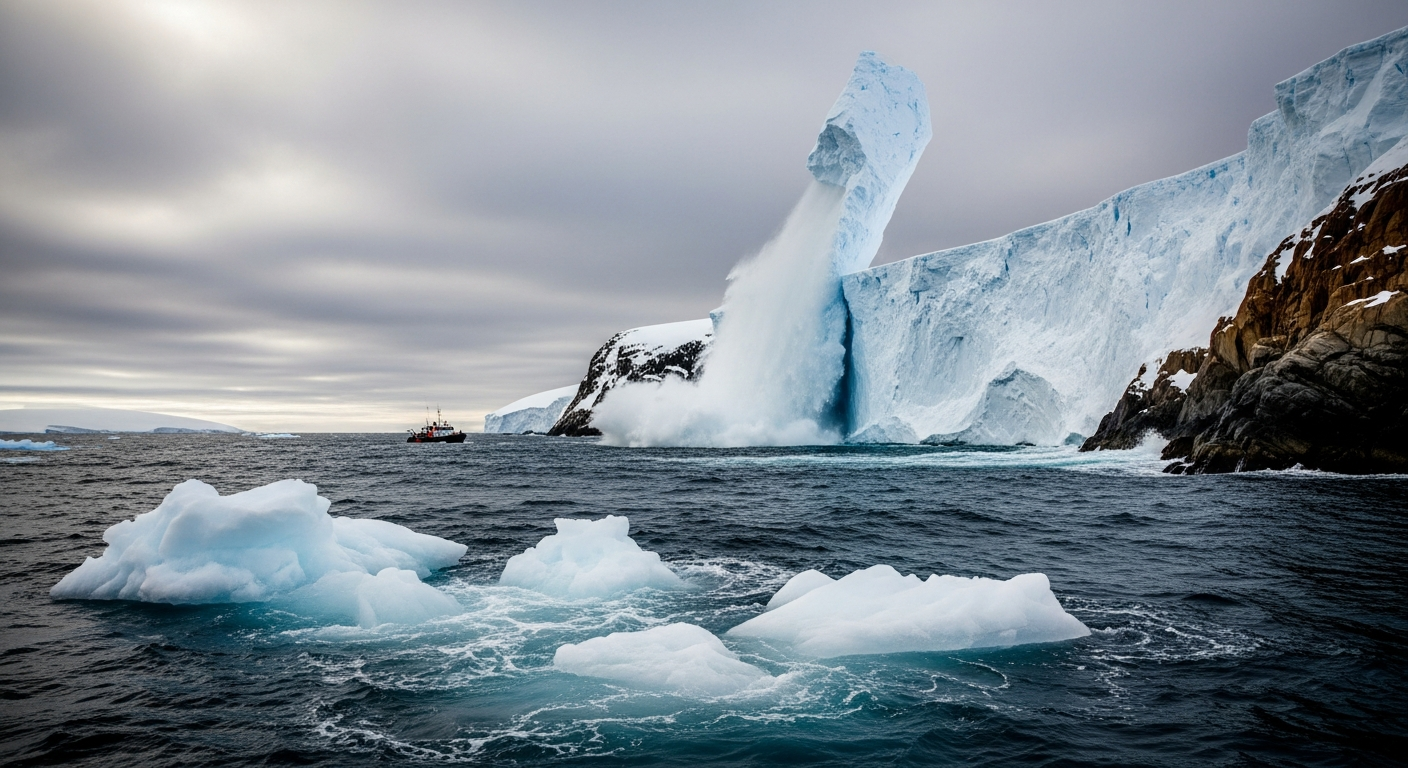
Antarctica’s Thwaites Glacier, ominously nicknamed the “Doomsday Glacier,” is showing increasingly concerning signs of structural weakening that could eventually lead to catastrophic sea level rise.
The Growing Threat
According to a recent study by the International Thwaites Glacier Collaboration (ITGC), significant cracks forming in the ice shelf continue to compromise its stability. Researchers from the University of Manitoba analyzed satellite data spanning from 2002 to 2022, documenting how these fractures have expanded around a critical shear zone.
The findings reveal that the total length of fractures has more than doubled over two decades, growing from approximately 100 miles to over 200 miles. Interestingly, while the total fracture length increased, the average length of individual cracks decreased, indicating new stress patterns affecting the glacier’s integrity.
Underwater Concerns
Below the waterline, the situation is equally alarming. Warming ocean waters are actively melting ice shelves like Thwaites, with changes observable over remarkably short timeframes. Researchers have identified swirling eddies of water up to six miles across that burrow underneath the glacier, accelerating the melting process.
Scientists have also discovered a troubling feedback loop: cold water from the melting ice shelf mixes with warmer, saltier ocean waters, creating turbulence that further increases ice melt. This self-reinforcing cycle is expected to intensify as global temperatures continue to rise.
Potential Consequences
The implications of a Thwaites Glacier collapse are sobering. Scientists estimate it could ultimately trigger up to 11 feet of global sea level rise, which would devastate coastal communities worldwide and displace tens of millions of people.
While the ITGC’s 2025 report indicates that a complete collapse is unlikely within the next few decades, the glacier’s retreat has “accelerated considerably over the past 40 years” and is projected to continue retreating faster through the 21st and 22nd centuries.
The Path Forward
Researchers emphasize that immediate and sustained climate change mitigation offers the best hope for delaying this ice loss. Decarbonization efforts could potentially prevent similar unstable retreats in marine-based sectors of East Antarctica.
As scientists race to understand the full impact of global warming on the Thwaites Glacier, the evidence increasingly suggests that without significant intervention, the “Doomsday” nickname may prove tragically apt.



GIPHY App Key not set. Please check settings