

 Thomas Unise
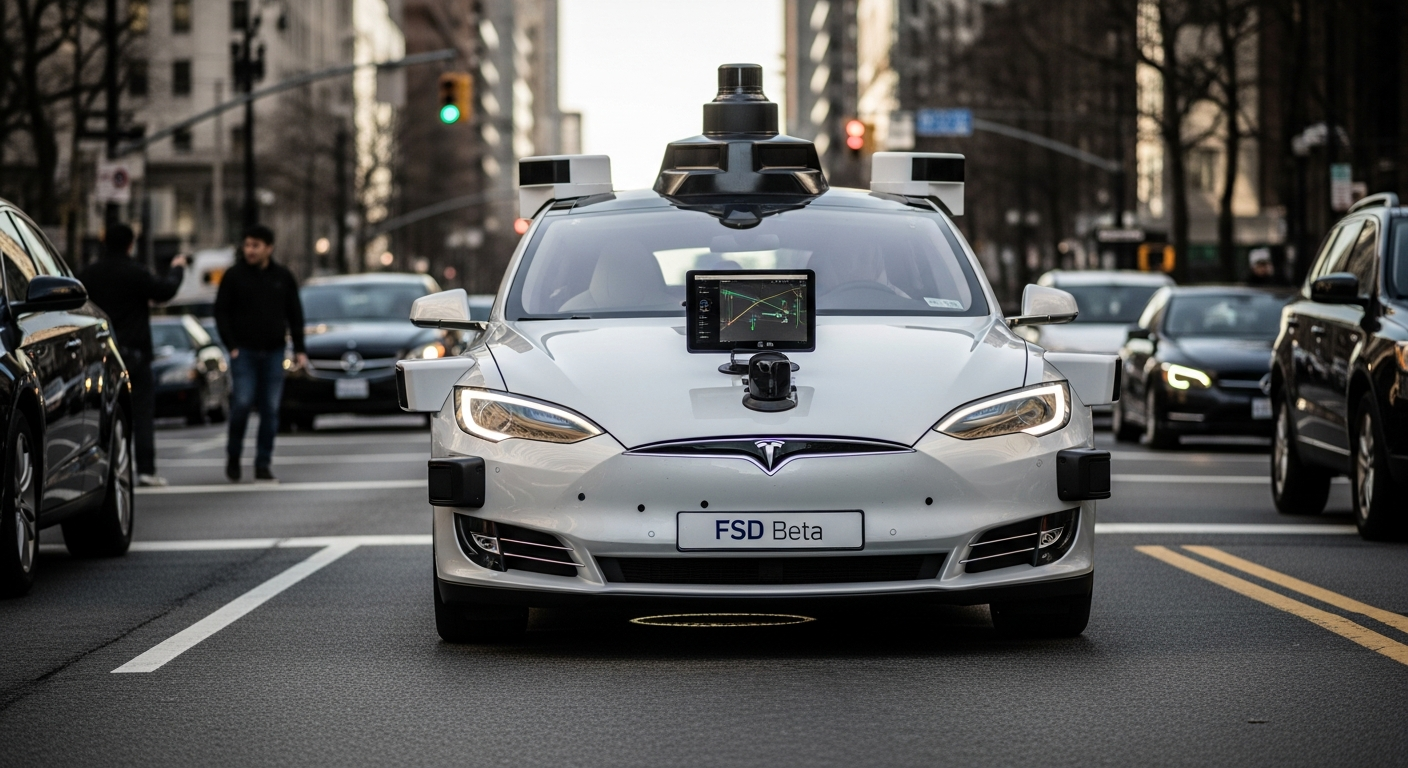
A Tesla owner and former SpaceX engineer, Daniel Milligan, recently shared footage of his Tesla’s Full Self-Driving (FSD) software attempting to steer his vehicle into a lake, highlighting ongoing concerns about autonomous driving technology.
The Lake Incident: What Happened
Milligan’s video shows his Tesla, operating on FSD version 14.2.2.4, making an unexpected right turn onto a boat ramp and accelerating toward a lake. The driver was forced to intervene to prevent the car from entering the water. Milligan later explained that his intended destination was a driveway approximately fifty feet away from the boat ramp.
Interestingly, when Milligan tested the same route during daylight hours, the vehicle correctly avoided the boat ramp. This suggests the error may have been related to lighting conditions affecting the car’s sensors or vision system.
Broader Context of Tesla’s FSD Issues
This incident adds to a growing list of problematic behaviors exhibited by Tesla’s autonomous driving systems:
- Multiple instances of FSD vehicles driving toward oncoming trains
- Numerous accidents, some fatal, involving both FSD and its predecessor, Autopilot
- A case where Autopilot was found partially responsible for a fatal accident involving a 22-year-old woman
The Reality of “Full Self-Driving”
Despite its name suggesting complete autonomy, Tesla’s FSD is classified as a driving assistance feature that requires drivers to remain attentive and ready to take control at any moment. Critics have argued that the name “Full Self-Driving” is misleading and may create unrealistic expectations about the system’s capabilities.
The technology’s widespread deployment—made available to millions of Tesla owners despite being unfinished—has been a controversial decision by CEO Elon Musk. This approach contrasts with other autonomous vehicle companies that typically limit testing to controlled environments with professional operators.
Owner Perspective
Despite the near-miss with the lake, Milligan maintains that FSD is a “game changer” while acknowledging it “needs more work before it’s fully autonomous.” This sentiment reflects the mixed feelings many Tesla owners have about the technology—enthusiasm for its potential coupled with recognition of its current limitations.
Key Takeaways
The incident highlights several important points about the current state of autonomous driving:
- Environmental factors like lighting can significantly impact system performance
- Driver supervision remains essential, regardless of marketing claims
- The technology continues to improve but faces real-world challenges
- There’s a disconnect between public perception of “self-driving” and the reality of driver assistance systems
As autonomous driving technology continues to evolve, incidents like this serve as reminders of both its promise and its current limitations.

GIPHY App Key not set. Please check settings