

 Thomas Unise
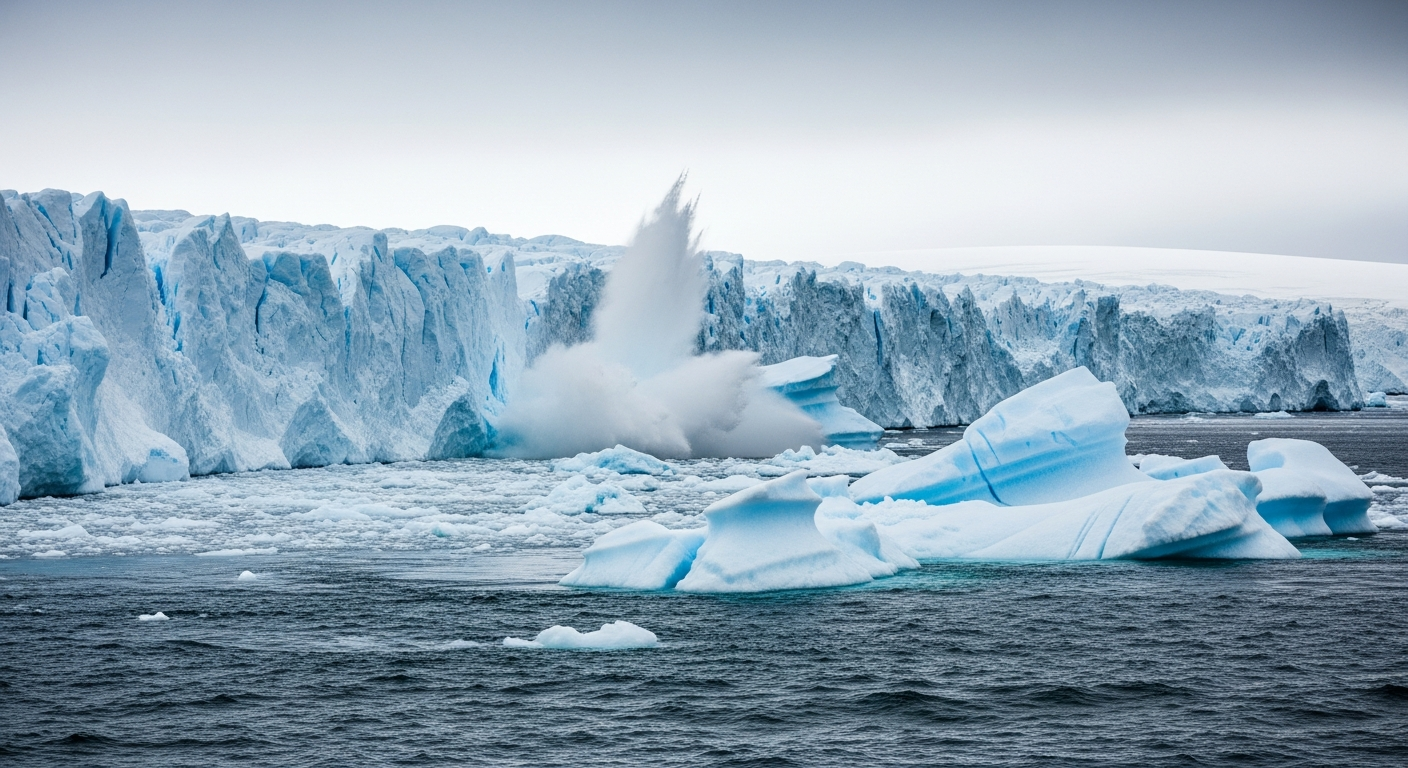
A team of scientists has set sail for Antarctica’s Thwaites Glacier, nicknamed the ‘Doomsday Glacier,’ to conduct critical research on its melting patterns and potential global impact. The mission aims to gather data that could help predict future sea level rises and climate change effects.
Why Thwaites Glacier Matters
The Thwaites Glacier, comparable in size to Florida, contains enough water to raise global sea levels by more than two feet if it melts entirely. Recent research indicates it’s melting at an alarming rate, earning its ominous nickname among climate scientists.
Scientists are particularly concerned because the glacier’s collapse could potentially trigger a broader meltdown of the West Antarctic ice sheet. Such an event could lead to catastrophic consequences:
- Sea levels could rise by up to 15 feet
- Coastal cities worldwide would face severe flooding
- The process could unfold over several centuries
Evidence suggests a similar event may have occurred approximately 120,000 years ago, making this research critically important for understanding our planet’s future.
The Research Expedition
Nearly 40 researchers departed from New Zealand on Saturday, prepared with multiple contingency plans for their Antarctic mission. The team will conduct several innovative experiments, including:
- Using airborne radar to effectively x-ray the glacier’s ice structure
- Studying how warm seawater infiltrates beneath the glacier
- Attaching sensors to seals to collect ocean temperature and salinity data
The seal-based data collection represents a particularly creative approach. Lars Boehme, an ecologist from the University of St. Andrews, explained that seals provide strategic data since “they go where the food is” – often areas where significant environmental and oceanographic activities occur.
Recent Discoveries and Concerns
Recent findings have heightened concerns about Thwaites Glacier’s vulnerability. Researchers discovered that the glacier’s underbelly, previously thought to be protected by contact with the seafloor, is actually exposed to warm seawater. This occurs as rising tides lift the glacier, allowing water to penetrate underneath and cause “vigorous melting.”
Doug Benn, a glaciologist at the University of St. Andrews, observed that “Thwaites has really broken up in front of our eyes,” highlighting the visible and rapid changes occurring in this critical ice formation.
Global Implications
The research on Thwaites Glacier has profound implications for climate science and global policy. Understanding the rate and mechanisms of the glacier’s melting could help scientists create more accurate models for predicting sea level rise, potentially giving coastal communities more time to prepare adaptation strategies.
While the complete collapse of the West Antarctic ice sheet represents a worst-case scenario, the possibility is too significant to ignore, especially as evidence of accelerating ice loss continues to mount.



GIPHY App Key not set. Please check settings