

 Thomas Unise
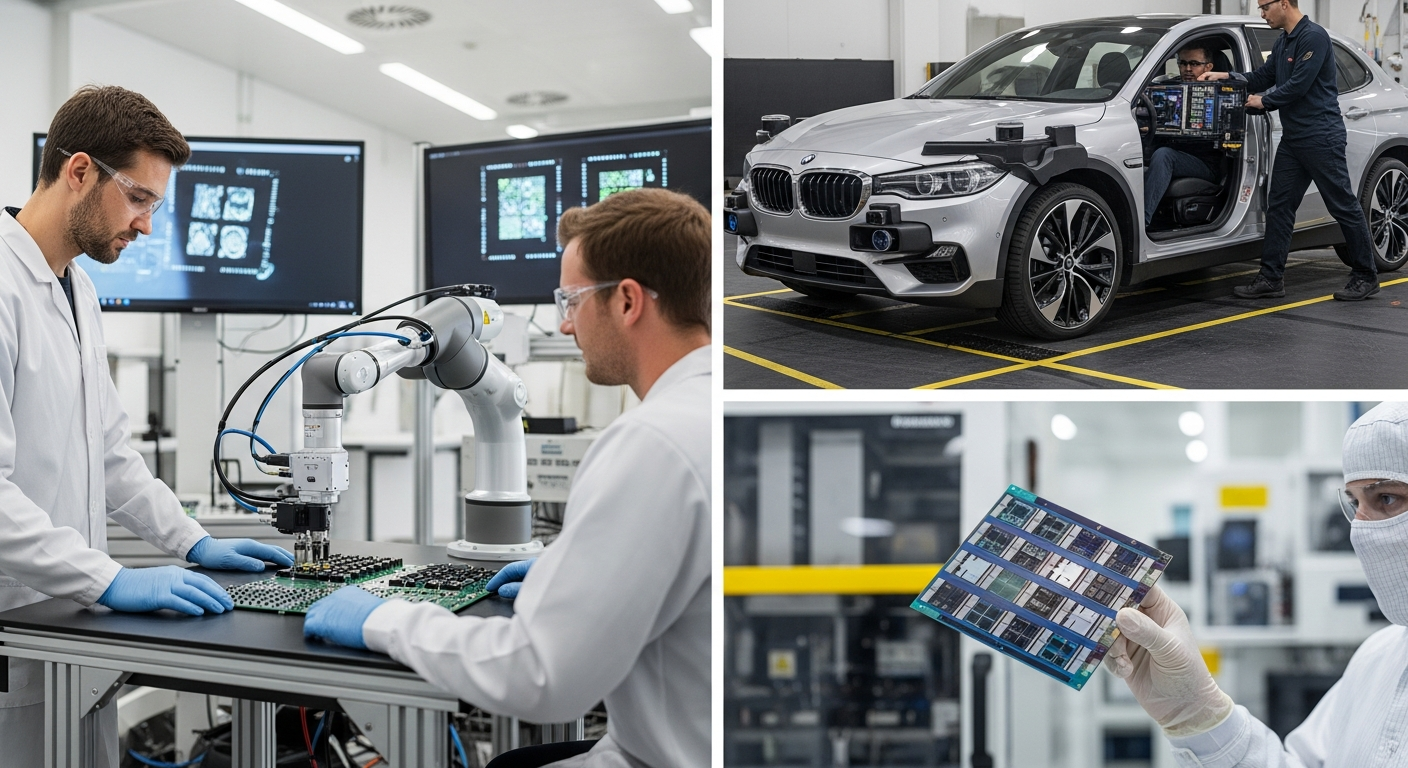
The term “Physical AI” represents the automotive industry’s latest tech-focused marketing buzzword, highlighting how car manufacturers now view themselves as technology pioneers. This concept refers to autonomous systems that interact with the real world using cameras and sensors to understand their surroundings and perform complex tasks.
What Is Physical AI?
Physical AI enables autonomous systems to perceive, understand, reason, and execute complicated actions in real-world environments. It powers humanoid robots working in factories (like the Hyundai-Google DeepMind-Boston Dynamics collaboration) and self-driving cars navigating complex traffic situations or transitioning control between human and software drivers.
The Chipmakers’ Opportunity
Chipmakers like Nvidia and ARM are the most vocal proponents of Physical AI, with Nvidia announcing new AI models for autonomous systems and ARM launching a dedicated Physical AI division at CES. For these companies, the automotive industry represents a potential $123 billion opportunity by 2032—an 85% increase from 2023.
Automotive Autonomy Announcements at CES
Several major autonomy-related announcements at CES demonstrated this trend:
- Ford plans to introduce hands-free driving systems by 2028
- The Sony-Honda Afeela collaboration aims for self-driving capabilities
- Nvidia is supplying chips for Geely’s “intelligent driving system”
- Mercedes-Benz is launching a Nvidia-powered hands-off driving system in the US
As Nvidia CEO Jensen Huang stated during his CES presentation, self-driving cars are “already a giant business for us.”
The Computing Power Shift
According to Mark Wakefield from AlixPartners, the “central brain” of vehicles will experience “quantum leaps” in computing power—becoming hundreds of times larger than current systems. This evolution creates a massive market opportunity for chipmakers, explaining their eagerness to promote this technology with appealing marketing terminology.


GIPHY App Key not set. Please check settings