

 Thomas Unise
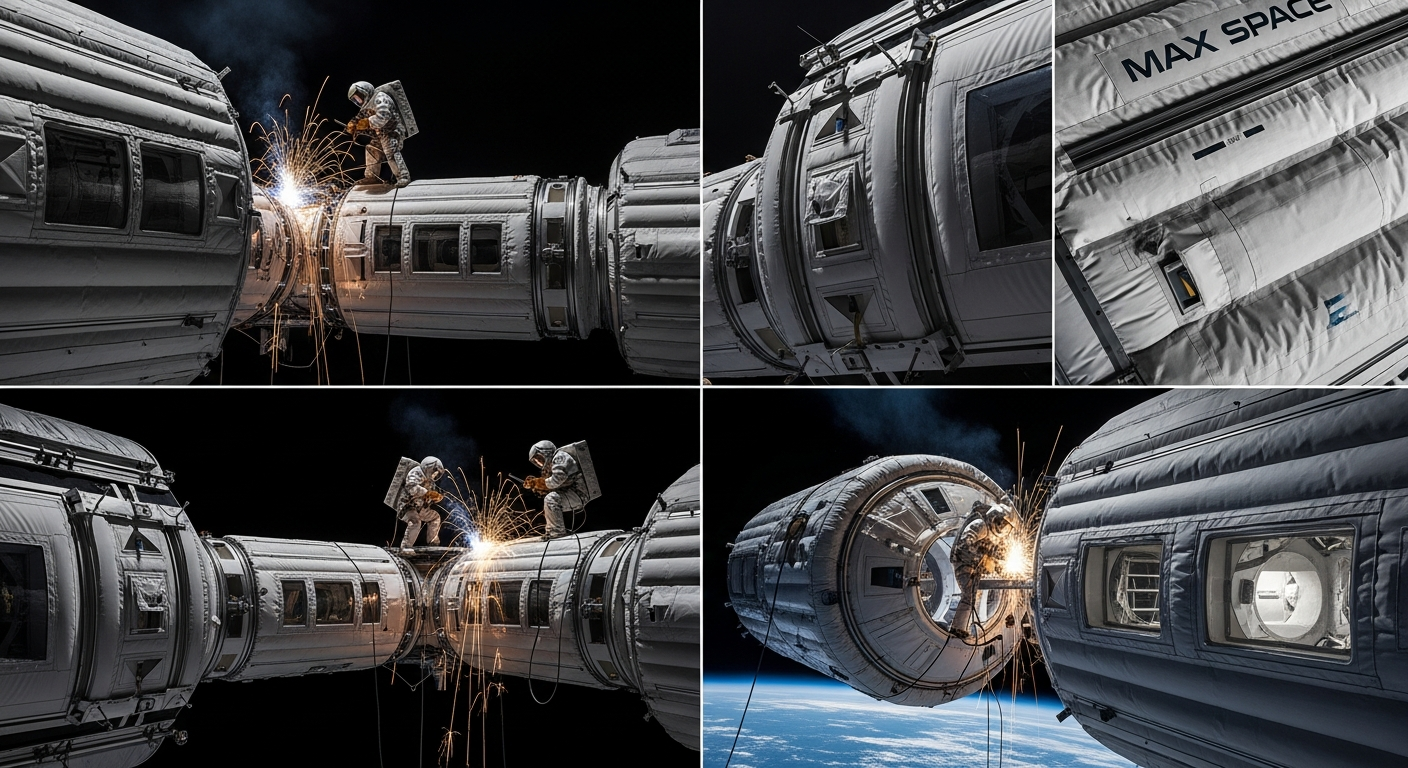
Max Space has unveiled plans for an ambitious inflatable space habitat called Thunderbird Station, which could transform how we build and utilize structures in orbit. This innovative approach promises to deliver significantly more space with fewer launches.
The Inflatable Revolution in Space Habitats
Traditional space stations like the ISS require multiple launches and complex assembly in orbit. Max Space is proposing a radically different approach with its Thunderbird Station concept, an inflatable habitat that can expand to approximately 12,300 cubic feet—about one-third the volume of the International Space Station—while requiring only a single SpaceX Falcon 9 rocket launch.
The company is targeting a 2029 launch date, offering future astronauts “unprecedented volume usable in all dimensions” according to their website. This development comes at a critical time, as the ISS is scheduled for retirement in just five years, potentially leaving NASA without a platform for conducting scientific experiments in space.
Features of the Thunderbird Station
The proposed habitat boasts several notable features designed to enhance the astronaut experience:
- Large domed windows for spectacular Earth and space views
- Huge screens for entertainment and communications
- Private pods for individual astronauts
- Reconfigurable interior layouts that can be adapted during missions
Development Timeline and Challenges
Max Space isn’t alone in pursuing inflatable space habitats, and the path from concept to reality presents significant challenges. The company plans to launch a scaled-down prototype no earlier than early 2027 on a SpaceX rideshare mission.
A critical test will be the habitat’s ability to withstand impacts from micrometeoroids and space debris—a growing concern in Earth’s increasingly crowded orbit. This concern was highlighted recently when China sent astronauts to install debris protection panels on their space station after a docked spacecraft sustained damage.
Beyond Earth Orbit
CEO Saleem Miyan has expressed ambitions beyond low Earth orbit, suggesting the habitat technology could be modified for lunar and Mars missions. The company decided to submit a proposal to NASA’s Commercial Low Earth Orbit Destinations (CLD) program after the agency revised the program in August 2023.
“We see so many interesting applications where habitats, whether human-rated or not, are required,” Miyan told SpaceNews. “Those are the areas where I think we’re going to stand out.”
Conclusion
While Max Space’s Thunderbird Station represents an exciting vision for more spacious and potentially luxurious orbital habitats, the company still faces substantial engineering challenges. If successful, however, this technology could dramatically reduce the cost and complexity of establishing human presence in space, potentially opening new opportunities for scientific research, commercial activities, and even space tourism.


GIPHY App Key not set. Please check settings