

 Thomas Unise
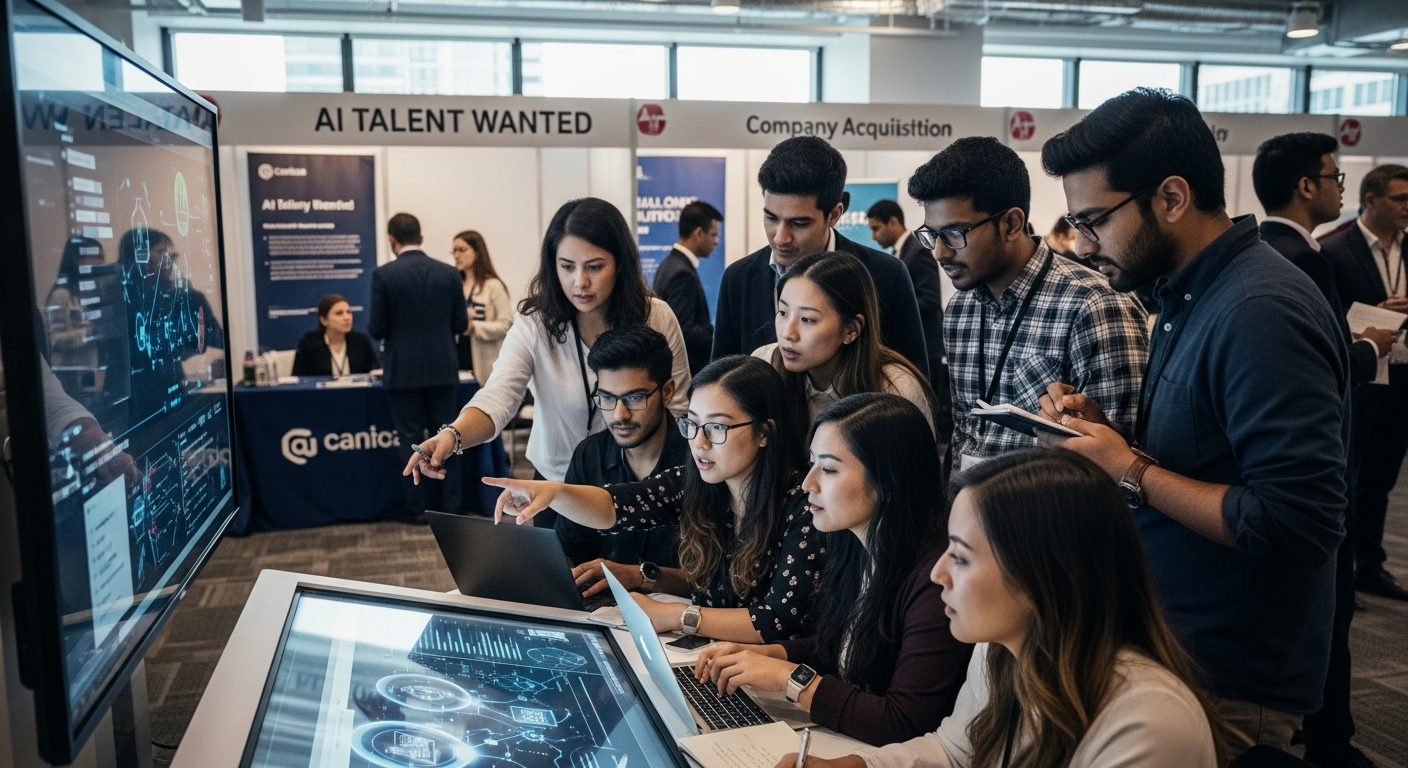
The AI industry is experiencing unprecedented movement of talent between companies, with major tech giants spending billions to acquire startups primarily for their teams rather than just their technology.
The New Normal of AI Talent Mobility
Silicon Valley has witnessed at least three major AI “acqui-hires” recently, with Meta investing over $14 billion in Scale AI, Google spending $2.4 billion on Windsurf’s technology and team, and Nvidia wagering $20 billion on Groq. This represents a significant shift from previous eras when founders and early employees typically remained with companies until major liquidity events or closure.
The frontier AI labs are engaged in what seems like a never-ending game of talent musical chairs. OpenAI has rehired researchers who left for Mira Murati’s startup, while Anthropic (founded by former OpenAI staffers) continues poaching talent from OpenAI.
Driving Factors Behind the Movement
Several factors are driving this unprecedented mobility:
- Financial incentives – companies like Meta reportedly offer top AI researchers compensation packages worth tens or hundreds of millions of dollars
- Pragmatism over idealism – founders and researchers are more realistic about institutional limitations
- Accelerated experience – one year at an AI startup today is equivalent to five years in previous tech eras
- Broader opportunity landscape – more options exist for talented individuals
- Cultural shifts – decreased loyalty to single institutions across tech
Investor Adaptation
Investors are adapting to this new reality by implementing protective measures:
- Increased vetting of founding teams for chemistry and cohesion
- Including protective provisions requiring board consent for material IP licensing
- Considering potential acqui-hire scenarios in early term sheets
Historical Context
This represents a significant departure from previous tech generations. In earlier eras, like when the original Thinking Machines Corporation existed in the 1980s-90s, employee mobility was limited. Even during the 2000s tech boom, many founders and early employees remained loyal to their companies for years.
The New Reality
Today’s AI talent is trading idealism for pragmatism. The rapid pace of AI development means people are moving quickly to capture new opportunities rather than building long-term reputations at single companies. While this generation of AI talent can currently name their price, the long-term implications of this shift remain to be seen.


GIPHY App Key not set. Please check settings