

 Thomas Unise
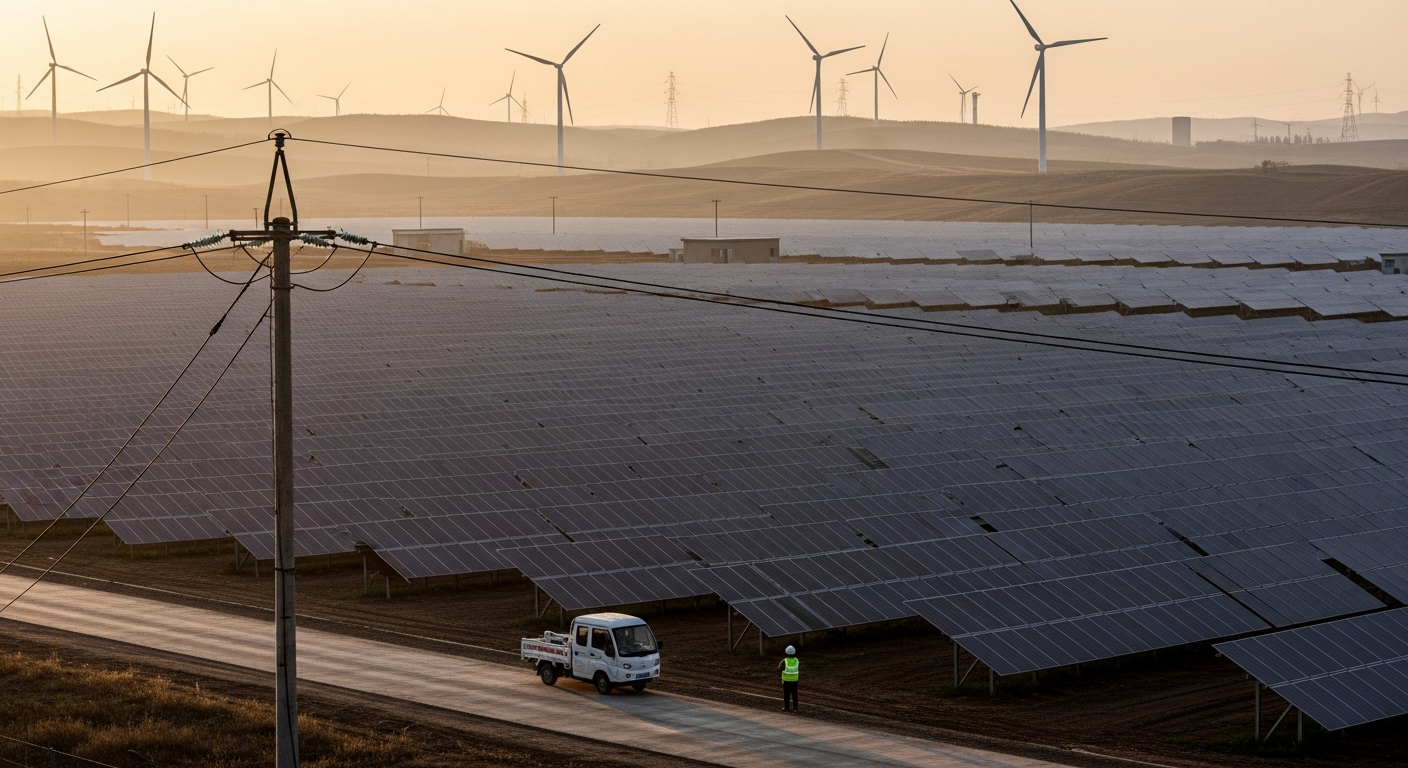
China has emerged as the undisputed global leader in solar energy production, transforming both domestic and international energy markets with unprecedented scale and efficiency.
China’s Massive Solar Expansion
Recent drone footage from China’s Guizhou province revealed an astonishing sight: entire mountain ranges covered with solar panels. This visual spectacle represents just a fraction of China’s enormous renewable energy infrastructure.
As of 2024, China accounts for 64% of the world’s utility-scale solar and wind construction, with 339 gigawatt hours of renewable energy infrastructure under development. This is particularly remarkable considering China represents only 17% of the global population.
The pace of growth is equally impressive. China’s solar capacity has grown at a compound annual rate of 11.7% from 2020 to 2024, nearly triple the global average of 4.24% during the same period. This acceleration suggests something more transformative than mere competitive advantage—it’s akin to a new industrial revolution.
Production Capacity and Global Impact
China now has the capacity to produce a full terawatt worth of solar panels annually. To contextualize this achievement, the entire planet’s electricity capacity—including all energy sources combined—is approximately 10 terawatts.
This massive production capacity isn’t benefiting only China, where consumer rooftop photovoltaic (PV) cells represented 60% of new solar infrastructure in early 2025. The global market is experiencing the effects as well, with Chinese-made PV panels becoming remarkably affordable. In Europe’s typically expensive market, these panels now cost less than fencing.
The abundance of Chinese solar panels has driven the average cost of electricity down to 4 cents per kilowatt-hour, potentially making solar the cheapest form of energy in human history—and prices may continue to fall.
Market Implications and Future Outlook
The implications of China’s solar dominance are profound and far-reaching. With solar panels becoming increasingly affordable, the global fossil fuel industry faces a growing existential threat to its financial viability.
While this transition presents unique economic challenges, it also represents one of the most significant industrial transformations of our era. The shift toward renewable energy, led by China’s massive solar production, could fundamentally alter global energy markets and accelerate the worldwide transition away from fossil fuels.
As China continues to expand its solar capacity and export affordable panels globally, the pace of renewable energy adoption worldwide may accelerate beyond previous projections, potentially reshaping energy economics and climate strategies across the planet.


GIPHY App Key not set. Please check settings