

 Thomas Unise
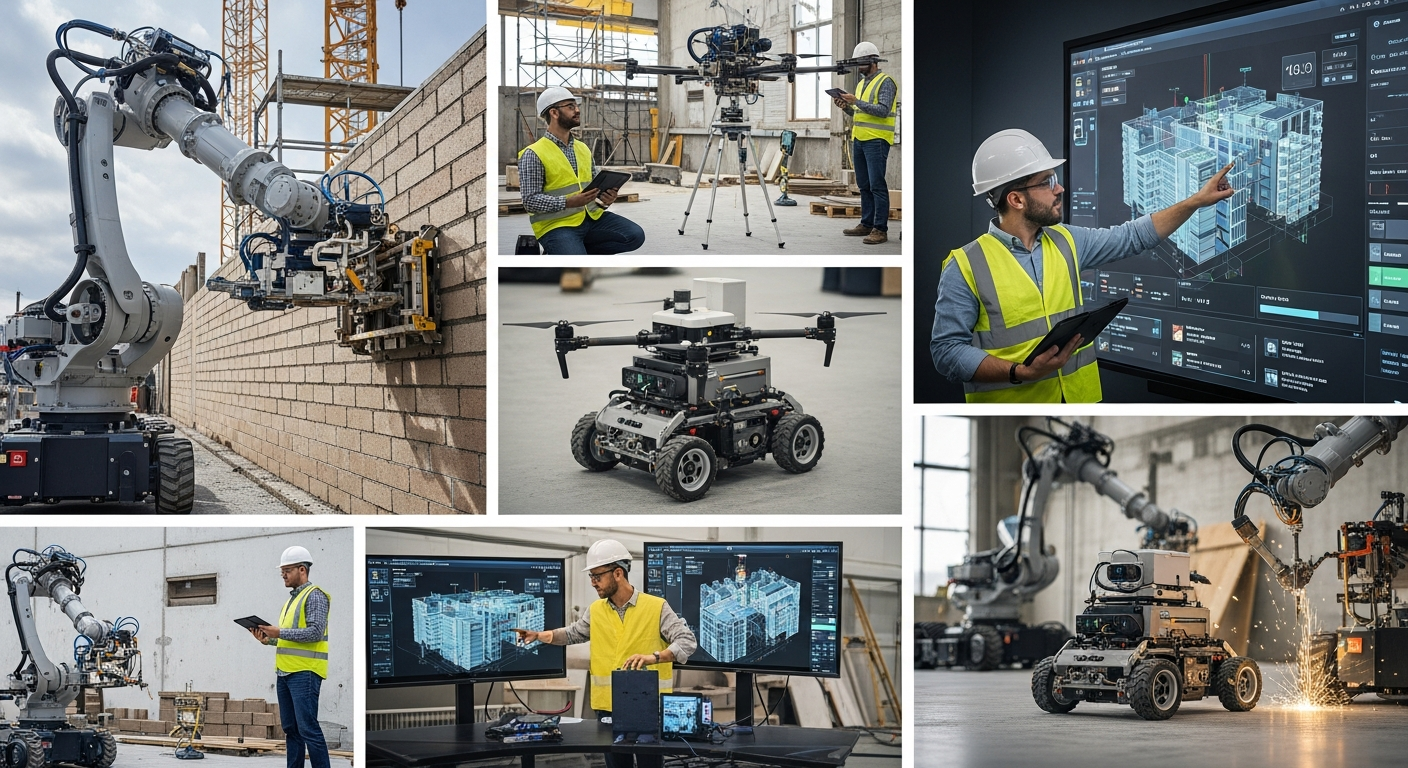
Buildroid Inc. is tackling construction automation with a novel approach that coordinates multiple robots into unified workflows, addressing a key limitation of existing solutions that automate only isolated tasks.
Buildroid’s Integrated Construction Automation Strategy
The San Francisco-based startup has developed a platform that uses NVIDIA Omniverse-based digital twin simulations to optimize construction workflows before deploying robots to job sites. This simulation-first approach aims to make robotics implementation more predictable and economically viable from the start.
According to CEO Slava Solonitsyn, Buildroid’s technology helps address critical industry challenges including labor shortages, rising costs, and demands for increased speed and precision. The platform is compatible with over 40 robot types and is offered through a robotics-as-a-service (RaaS) model.
Market Entry and Funding
After successful pilots in the UAE, Buildroid emerged from stealth mode in November 2025 and entered the U.S. market with $2 million in pre-seed funding led by venture capitalist Tim Draper. The company plans to begin commercial implementations in Q1 2026, focusing initially on blockwork and partition-wall installation—a $13 billion segment within the global construction industry.
Buildroid is using a shared-savings business model, receiving 50% of net efficiency gains while committing to specific performance metrics.
Technical Approach and Integration
CTO Anton Glance explained that Buildroid currently supports one block-laying robot model with plans to add two more: a compact version for residential layouts and an autonomous mobile robot for materials delivery. The company uses edge computing to bridge between robots and their platform, providing real-time, context-aware guidance based on sensor data.
The digital twin technology serves dual purposes: initial planning and real-time replanning when conditions change. This allows the system to automatically update workflows and redistribute tasks if a robot goes offline or site conditions change.
Future Growth Plans
Buildroid partners with robot manufacturers regardless of country, prioritizing systems with higher levels of autonomy. For promising but less advanced robots, the company collaborates with manufacturers to enhance performance.
With the new funding, Buildroid plans to expand in the U.S. market with local teams to support their end-to-end solution. Before global rollout, they’re focused on completing their BIM-to-BUILD platform and validating it through real-world reference projects.
Key Differentiators
Unlike single-robot solutions, Buildroid’s platform coordinates multiple systems through a vendor-agnostic approach that maintains the critical role of skilled human operators. The company initially plans to have engineers onsite for supervision but aims to eventually have one supervisor overseeing an entire fleet of robots, with their AI orchestrator handling most coordination and decision-making.

GIPHY App Key not set. Please check settings