

 Thomas Unise
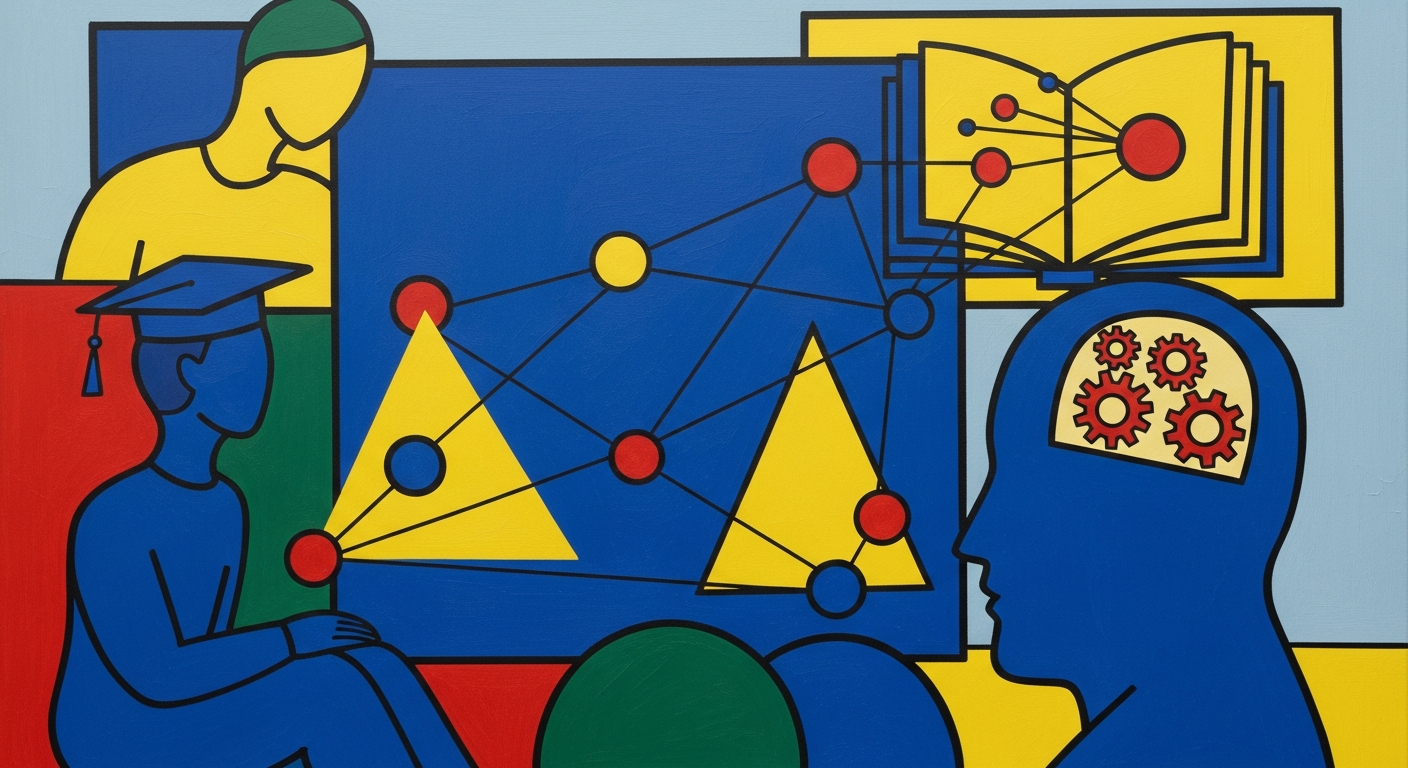
Artificial intelligence is evolving beyond simple imitation of human work toward a more autonomous learning approach that mirrors human cognitive development. A groundbreaking project called Absolute Zero Reasoner (AZR) demonstrates how AI can learn to reason by creating and solving its own problems.
How Absolute Zero Reasoner Works
Developed by researchers from Tsinghua University, the Beijing Institute for General Artificial Intelligence (BIGAI), and Pennsylvania State University, AZR represents a significant advancement in AI learning methodology. Unlike conventional AI systems that primarily learn from human-created examples, AZR follows a three-step process:
- First, it uses a large language model to generate challenging but solvable Python coding problems
- Then, it attempts to solve these self-generated problems
- Finally, it runs the code to check its work, using successes and failures to refine the original model
Impressive Results
This self-improvement cycle has yielded remarkable outcomes. The researchers found that AZR significantly enhanced the coding and reasoning capabilities of both 7 billion and 14 billion parameter versions of the open-source language model Qwen. Most notably, these models outperformed some AI systems trained on human-curated data, suggesting that self-directed learning can be more effective than traditional training methods in certain contexts.
The Human Learning Connection
Andrew Zhao, a PhD student at Tsinghua University who originated the Absolute Zero concept, draws parallels between this approach and human learning development. He explains that humans initially learn through imitation but eventually progress by asking their own questions, potentially surpassing their teachers. This concept of “self-play” in AI has roots in earlier work by AI pioneers like Jürgen Schmidhuber and Pierre-Yves Oudeyer.
Scaling Intelligence
One particularly exciting aspect of AZR is how the model’s capabilities scale. As noted by researcher Zilong Zheng, “the difficulty level grows as the model becomes more powerful.” This suggests a virtuous cycle where improved problem-solving leads to more complex challenges, which in turn drives further improvement—potentially opening a path toward more advanced forms of artificial intelligence.
Current Limitations and Future Potential
The current implementation of AZR works primarily on problems with clear verification methods, such as mathematics and coding tasks. However, researchers envision expanding this approach to more complex domains, including web browsing and office task automation, where the AI could potentially evaluate the correctness of its own actions.
The implications of this research extend beyond immediate applications. In theory, approaches like Absolute Zero could allow AI models to transcend human teaching limitations, potentially offering a pathway toward more advanced forms of artificial intelligence.
Industry Adoption
The self-directed learning approach is gaining traction in major AI research labs. Similar projects include Agent0 from Salesforce, Stanford, and UNC Chapel Hill, which features a self-improving agent that uses software tools. Researchers from Meta, the University of Illinois, and Carnegie Mellon have also developed a system employing self-play for software engineering, which they suggest could be a stepping stone toward “superintelligent software agents.”
Looking Ahead
As conventional data sources become scarcer and more expensive, finding innovative learning methods for AI will likely be a significant focus for the technology industry. Projects like Absolute Zero represent a shift toward AI systems that learn more like humans—through curiosity, self-directed problem-solving, and iterative improvement—rather than mere imitation of existing work.


GIPHY App Key not set. Please check settings