

 Thomas Unise
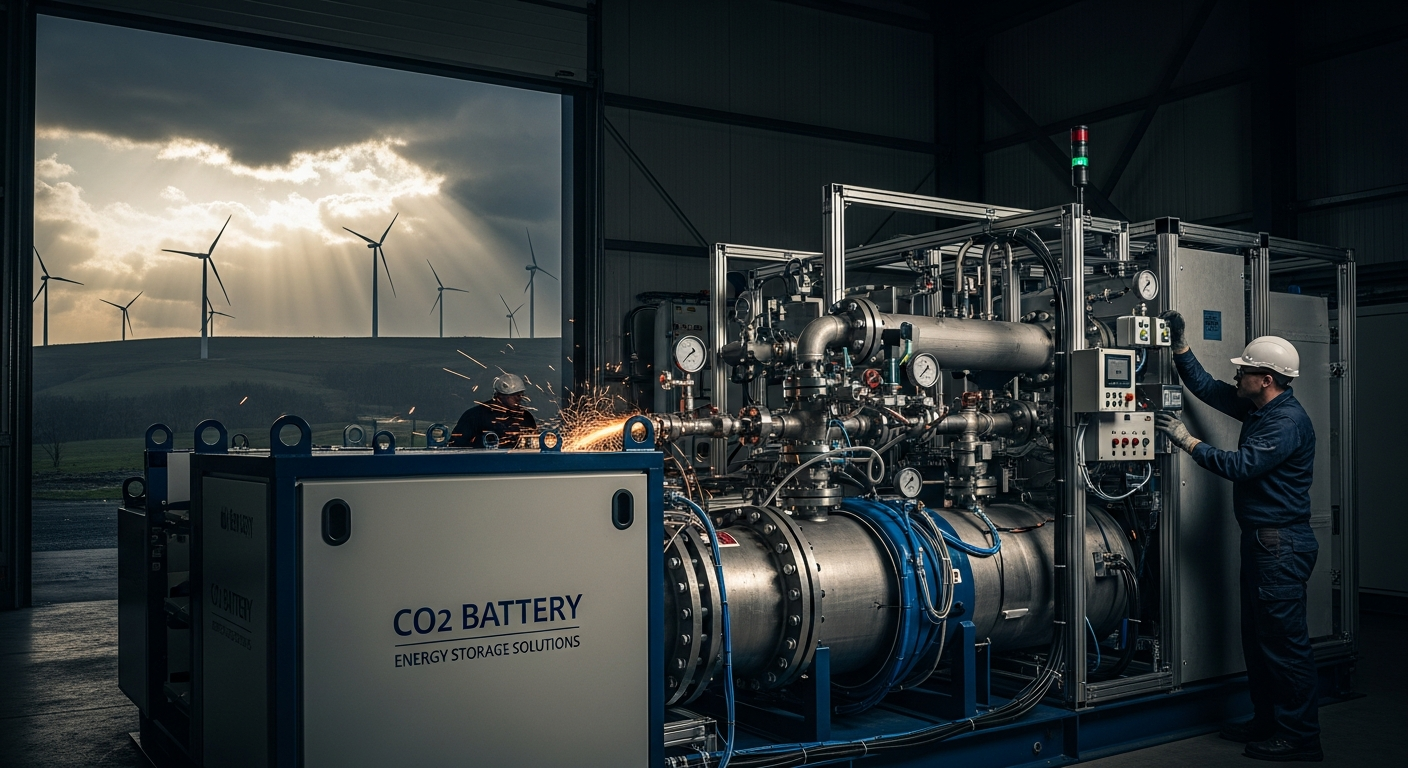
Energy storage remains one of renewable energy’s biggest challenges, but Milan-based company Energy Dome has developed an innovative solution: enormous domes filled with compressed carbon dioxide that can store and release energy on demand.
How CO2 Batteries Work
The concept behind Energy Dome’s “CO2 battery” is straightforward yet effective. The system stores energy by using excess renewable power to compress carbon dioxide gas. When electricity is needed, the gas is depressurized to spin turbines and generate power.
During the charging process, a thermal-energy storage system cools the CO2 to ambient pressure, and a condenser transforms it into liquid over approximately ten hours. For discharge, the CO2 is evaporated and heated to power a turbine, effectively bridging the gap between renewable energy generation and consumption times.
Key Features and Benefits
A fully charged CO2 battery facility can store an impressive 200 megawatt-hours of electricity—sufficient to power around 6,000 homes for an entire day. Unlike many other renewable energy storage solutions, CO2 batteries don’t require special minerals, complex supply chains, or constant maintenance.
The standardized, “plug and play” design has attracted major tech companies like Google, which announced a partnership with Energy Dome earlier this year. Google plans to deploy these facilities across its key data centers in Europe, the United States, and the Asia-Pacific region.
Current Developments
Energy Dome is currently operating a pilot CO2 battery on five hectares of flat land in Sardinia, Italy. The company aims to expand rapidly with similar facilities worldwide, including planned installations in Karnataka, India, and Wisconsin, USA. China is also reportedly working on constructing CO2 batteries.
Challenges and Considerations
Despite the promising technology, some challenges remain. CO2 batteries require significantly more physical space than lithium-ion battery storage facilities. There’s also the risk of puncture, which could release substantial amounts of CO2 into the atmosphere—though proponents argue these emissions would be negligible compared to those from fossil fuel plants.
Questions about long-term economic viability also persist as the technology scales up for commercial deployment.
The Bigger Picture
This technology represents a potential solution to the critical “long-term duration energy storage” (LDES) problem that has limited renewable energy adoption. For example, solar energy generation peaks during daylight hours, but household demand typically peaks in the evening when people return home—creating a mismatch that effective storage could resolve.
As renewable energy continues to grow worldwide, innovations like the CO2 battery may play a crucial role in making clean energy more reliable and available on demand.



GIPHY App Key not set. Please check settings