

 Thomas Unise
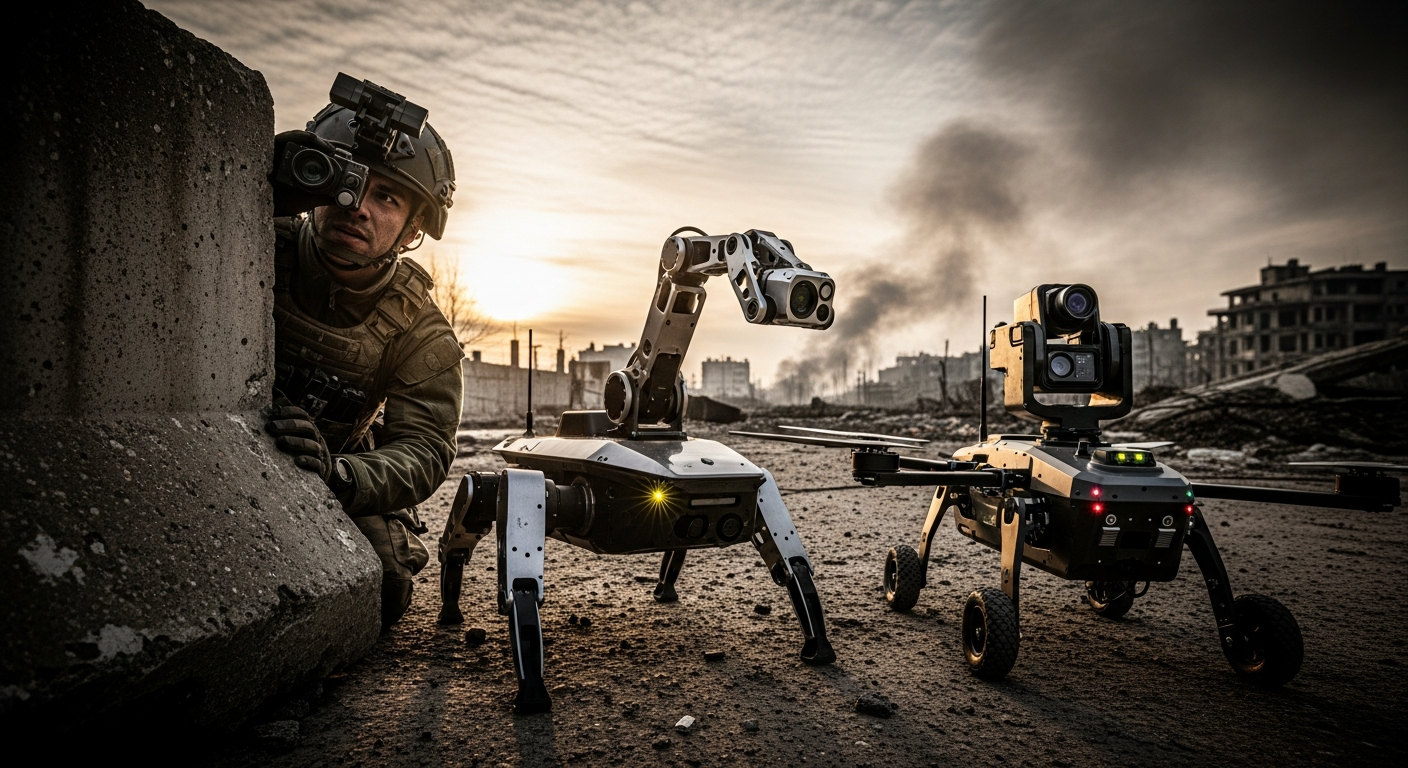
Silicon Valley startup Scout AI is developing AI agents that control lethal autonomous weapons systems, representing a new frontier in military technology. Unlike other AI companies focused on digital tasks, Scout AI’s systems are designed to control physical combat operations with deadly force.
Key Developments in Military AI
In a recent demonstration at a military base in California, Scout AI showcased its “Fury Orchestrator” system – a large AI model that controlled an autonomous ground vehicle and lethal drones to locate and destroy a target truck. The system operates through a hierarchy of AI models: a 100+ billion parameter model interprets commands and orchestrates smaller 10-billion parameter models running on vehicles and drones.
The company’s CEO, Colby Adcock, describes their mission as “training AI to go from being a generalized chatbot or agentic assistant to being a warfighter.” Scout AI already holds four Department of Defense contracts and is competing for additional opportunities to develop drone swarm control systems.
Technical Approach
Scout AI’s technology uses modified open-source large language models with restrictions removed, capable of running either in secure cloud environments or on air-gapped computers. The system’s key differentiator, according to the company, is its ability to replan operations based on real-time information rather than blindly executing pre-programmed instructions.
Concerns and Challenges
Military AI experts like Michael Horowitz from the University of Pennsylvania acknowledge the importance of defense tech startups pushing boundaries, but caution about several challenges:
- Large language models are inherently unpredictable
- AI agents can misbehave even on simple tasks
- Military systems require robust cybersecurity validation
- Ethical concerns about AI making life-or-death decisions
Arms control experts and AI ethicists warn about the complexities and risks of AI-controlled weapons, particularly regarding target identification and compliance with international laws like the Geneva Convention.
Real-World Context
The development comes as the war in Ukraine has demonstrated how consumer technologies like drones can be rapidly adapted for combat purposes. The race to militarize AI is also reflected in US export controls on advanced AI chips to China, though some restrictions were recently loosened by the Trump administration.
The Path Forward
Scout AI claims its technology is designed to adhere to military rules of engagement and international norms. However, experts caution against confusing impressive demonstrations with field-ready military systems that require exceptional reliability and security. According to Adcock, it would take at least a year for the technology to be ready for actual deployment.


GIPHY App Key not set. Please check settings