

 Thomas Unise
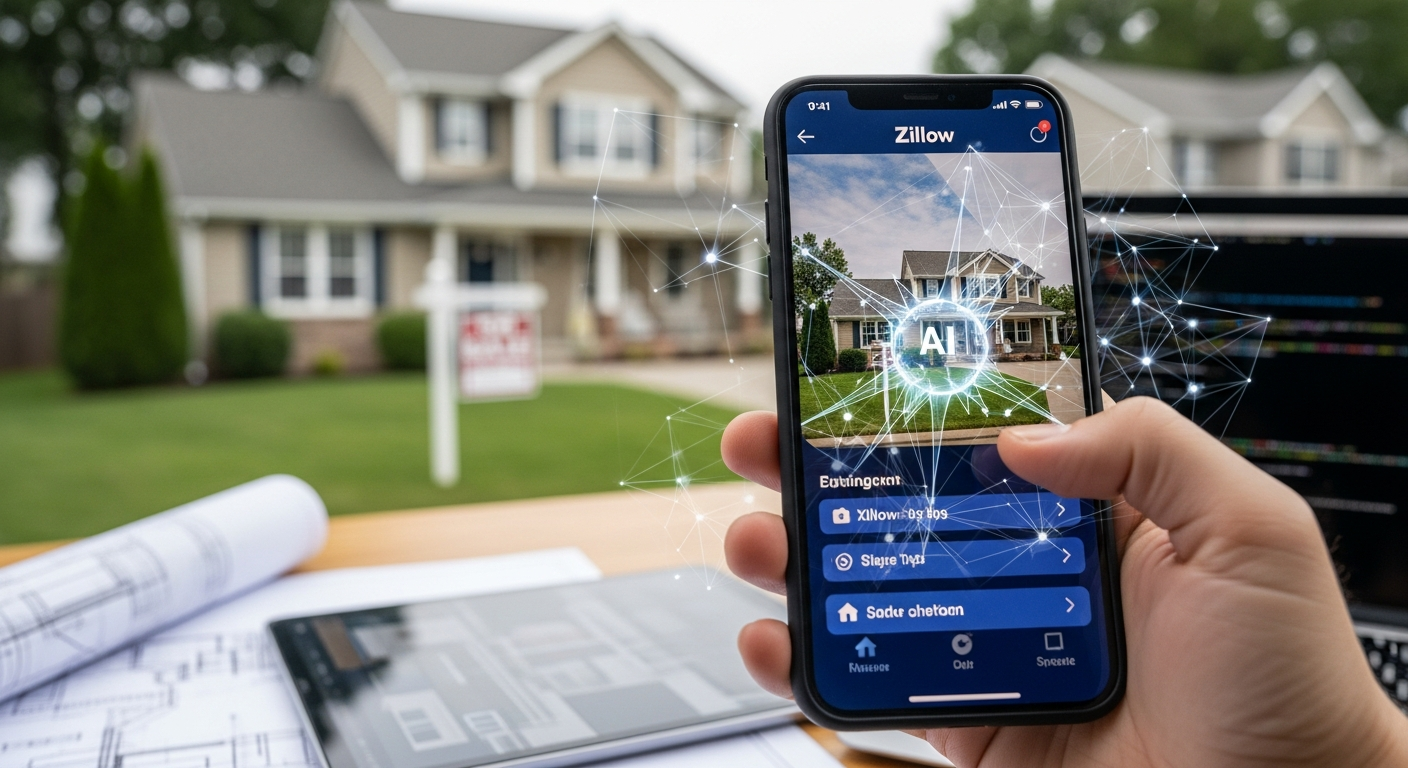
Zillow faces a challenging real estate market while betting on AI innovations to maintain its competitive edge, according to CEO Jeremy Wacksman. Despite the housing market “bouncing along the bottom” with only 4.1 million existing homes sold last year compared to a normal 5.5-6 million, Zillow is looking toward AI as both an opportunity and potential risk.
Current Market Challenges
The real estate market remains sluggish, with Wacksman expecting only marginal improvements in 2026. January’s historic drop in home sales suggests even this might be optimistic. While Zillow is performing better than the industry overall, its valuation stands at just a quarter of its 2021 peak, and despite increased earnings last quarter, its stock fell nearly 5% following the announcement.
AI Innovations at Zillow
Zillow has integrated AI throughout its platform, building on its 20-year history of using machine learning for features like “Zestimates.” Recent AI implementations include:
- SkyTour: Uses Gaussian Splatting technology to transform drone footage into 3D property renderings
- Virtual Staging: AI-powered furniture placement in empty homes (with transparency requirements)
- Natural language search capabilities allowing specific queries like “homes near my kid’s new school, with a fenced-in yard, under $3,000 a month”
- Zillow Immerse: A virtual reality experience for the Apple Vision Pro (though adoption remains in single-digit percentages)
The company also leverages AI internally to boost productivity among programmers, customer support, and design teams while maintaining a “relatively flat” headcount.
Competitive Threats
Zillow faces significant competitive challenges as the landscape evolves:
The public nature of real estate listings makes differentiation difficult, and chatbots could potentially bypass Zillow’s platform entirely. While Zillow has integrated with OpenAI’s platform, search results through chatbots may distribute listings across multiple competitors.
Google presents perhaps the most significant threat, experimenting with its own home listings alongside real estate agent ads. This development caused another dip in Zillow’s stock price and sparked acquisition speculation.
Future Outlook
Wacksman remains confident in Zillow’s future, emphasizing that the company’s deep integration with local realtor agencies and comprehensive transaction capabilities will maintain its relevance. However, the article suggests the app paradigm Zillow relies on may eventually be supplanted by AI-centric platforms from tech giants like Google, creating significant uncertainty for specialized services like Zillow.



GIPHY App Key not set. Please check settings