

 Thomas Unise
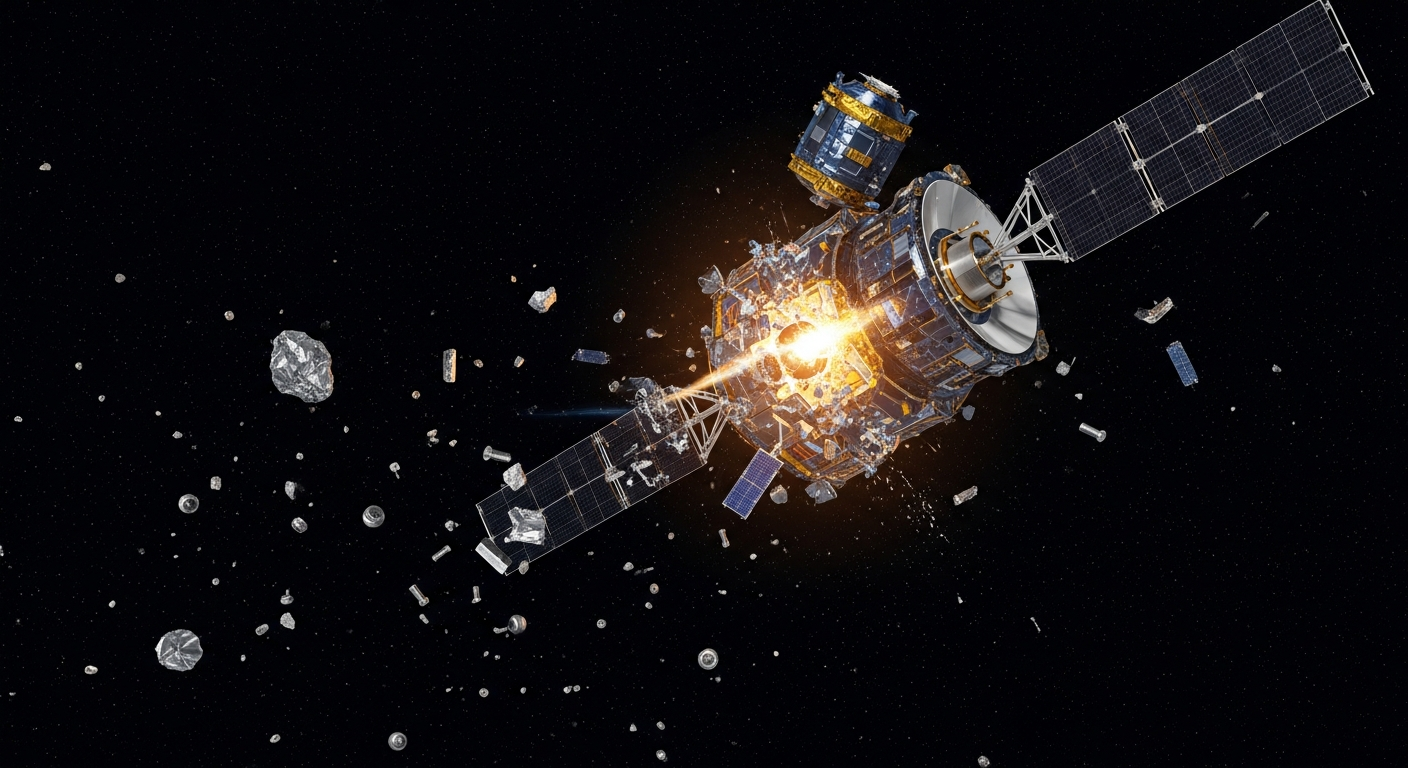
Scientists have developed a new metric to measure the growing risk of catastrophic satellite collisions in Earth’s orbit, warning that we may be just days away from a potential disaster in certain scenarios.
The Growing Threat of Kessler Syndrome
In 1978, NASA researcher Donald Kessler warned about a scenario where a single satellite collision could trigger a cascade of subsequent crashes, creating a belt of debris around Earth. This phenomenon, now known as “Kessler syndrome,” threatens both astronaut safety and future space exploration by potentially turning Earth’s orbit into a dangerous debris field.
Researchers from Princeton University, the University of British Columbia, and the University of Regina have now quantified this risk with a new metric called the “Collision Realization and Significant Harm (CRASH) Clock,” which measures how quickly a catastrophic collision might occur if satellites lost their ability to avoid other objects.
Alarming Findings
The research revealed some concerning statistics:
- If a severe solar storm or other disruptive event disabled satellite communications and tracking capabilities, a potentially catastrophic collision could occur in just 2.8 days
- In 2018, before the “megaconstellation era,” this risk was much lower with a CRASH Clock of 121 days
- The number of objects in low-Earth orbit has nearly doubled from 13,700 in 2019 to over 24,000 in 2025
SpaceX and the Megaconstellation Problem
SpaceX’s Starlink network represents the largest contributor to orbital congestion. As of October 2024, the company had launched 10,000 satellites, with around 9,000 currently functioning—representing over 60% of all active satellites orbiting Earth. Despite being designed to burn up during reentry, these massive constellations significantly increase collision risks.
The problem is set to worsen as competitors like Amazon and China’s Aerospace Science and Industry Corporation plan their own broadband constellations, exponentially increasing the number of objects in orbit.
Beyond Collision Risks
Satellite constellations pose additional concerns beyond potential crashes:
- Major disruptions to astronomical observations
- Potential release of harmful pollutants like aluminum oxides during satellite reentry
- Possible damage to Earth’s upper atmosphere and ozone layer
The Slow-Motion Disaster Scenario
Rather than an immediate catastrophe, researchers compare a major collision to the Exxon Valdez oil spill—a disaster that unfolds gradually. Satellite operations could continue after a collision but would face higher risks and different operating parameters, creating a slow-motion crisis that could eventually lead to severe limitations on orbital activities.
As the number of satellites continues to increase, experts are calling for increased oversight and stricter regulations to manage the growing risks to our orbital environment.



GIPHY App Key not set. Please check settings