

 Thomas Unise
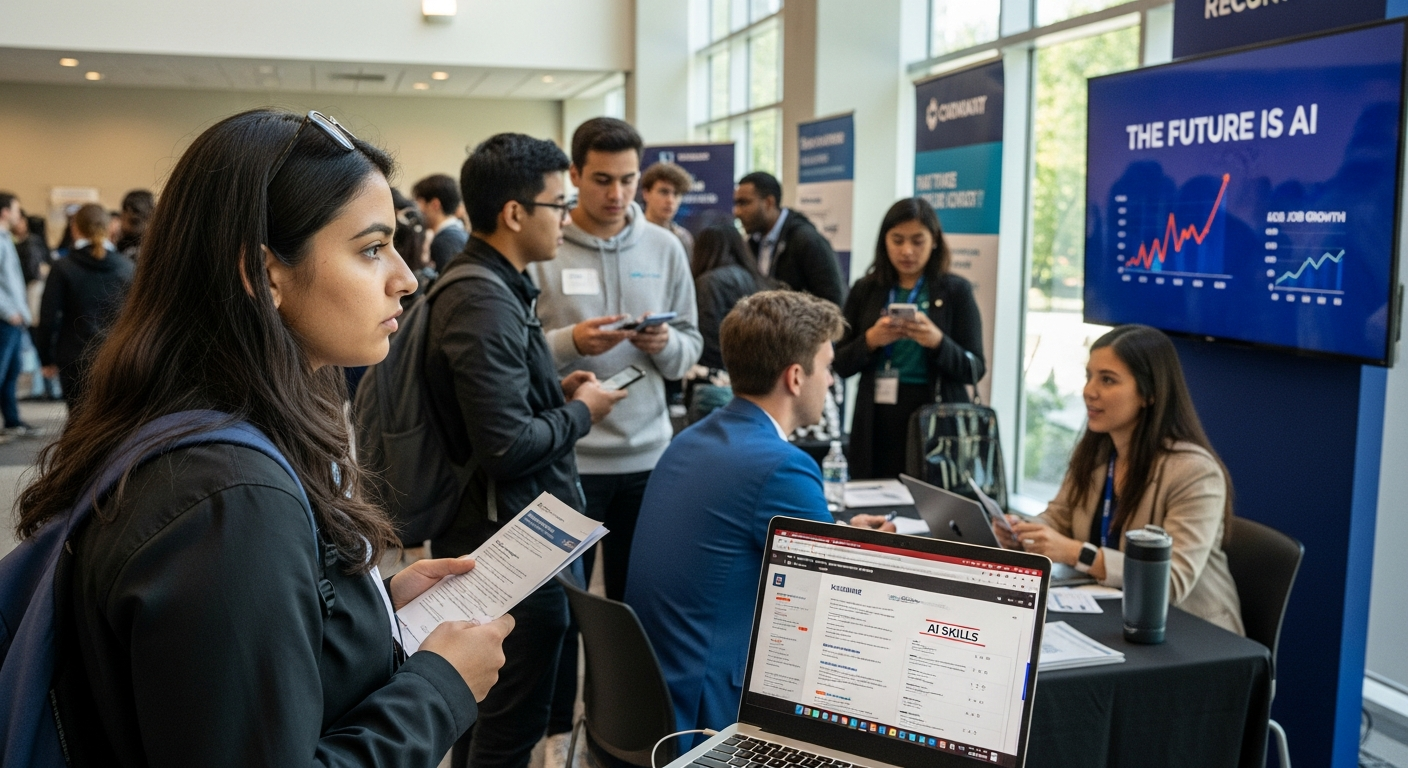
The higher education system in the United States was already facing significant challenges before the rise of artificial intelligence, but AI has exacerbated these issues, creating a bleak landscape for recent college graduates.
Pre-AI Challenges in Higher Education
Even before ChatGPT entered the mainstream in 2022, universities were struggling with declining enrollment. Between 2010 and 2022, university enrollment in the US dropped by nearly 15 percent. State funding cuts shifted the burden of rising tuition costs to students, prompting many to question whether a college degree was worth the substantial financial investment.
The Current Job Market for Recent Graduates
Recent college graduates are facing one of the worst job markets in recent history. According to data from the Federal Reserve Bank of New York from December, the unemployment rate for recent college graduates stands at 5.8 percent—1.7 percent higher than the average across all workers and almost double the rate for all college graduates (2.9 percent).
The experience of Alina McMahon, a University of Pittsburgh graduate, illustrates this difficult reality. After applying to approximately 150 full-time positions, the only feedback she received from hiring managers was that roles were being cut.
How AI Is Worsening the Situation
Artificial intelligence has fundamentally changed how companies evaluate hiring and training young talent. Traditional entry points into careers, such as internships, are being eliminated by major companies as they reassess the value proposition of training new graduates.
Simon Kho, former head of early career programs at Raymond James Financial, explains that it typically took about 18 months for new college graduates to provide a return on the investment required to train them. With AI entering the workforce, companies are increasingly asking whether artificial intelligence can replace these entry-level positions altogether.
The Diminishing ROI of College Education
The combination of high tuition costs, student debt, and diminishing job prospects is destroying the perceived return on investment for college education. This has led to shrinking class sizes, particularly in technology-focused degrees like computer science.
The current reality is stark: without internship experience before graduation, students are significantly less likely to secure careers in their chosen fields. Yet companies are increasingly reluctant to provide these opportunities.
The Future of Higher Education
Ryan Craig, author of “Apprentice Nation,” warns that “colleges and universities face an existential issue.” To remain relevant, educational institutions must integrate relevant, in-field, and preferably paid work experiences for all students before they graduate.
Without significant changes to how universities prepare students for the workforce, the value proposition of higher education will continue to deteriorate in an AI-influenced job market.



GIPHY App Key not set. Please check settings