

 Thomas Unise
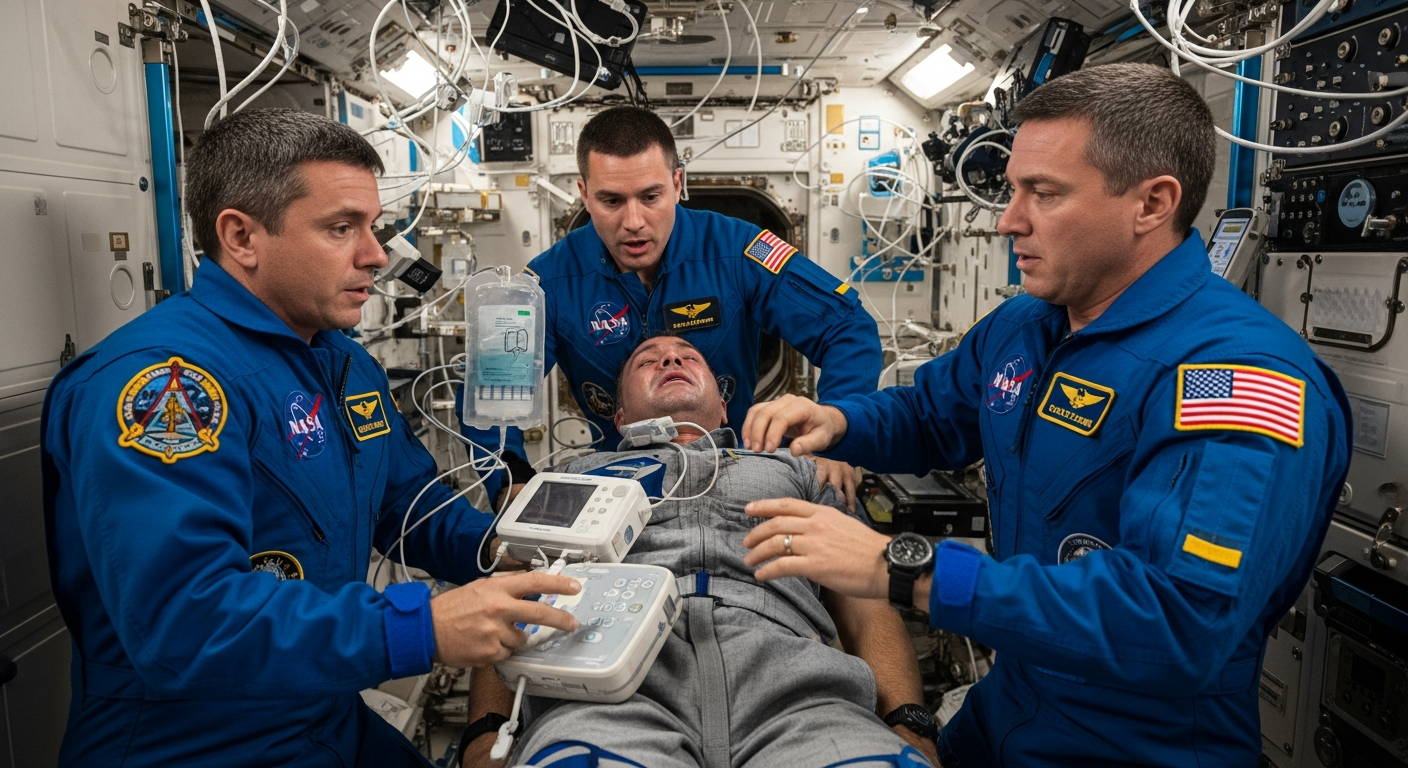
NASA recently conducted its first-ever medical evacuation from the International Space Station (ISS) in its 25-year history, reducing the orbital outpost to a three-person crew.
Emergency Evacuation Details
Following a medical incident involving a crew member, NASA postponed a planned January 8 spacewalk and subsequently announced an emergency evacuation. While the affected astronaut was reported as stable, NASA prioritized their health by arranging an early return.
The four Crew-11 astronauts, who had been scheduled to return next month, departed weeks ahead of schedule on Wednesday and successfully splashed down off San Diego early Thursday morning.
Skeleton Crew Operations
The evacuation has left the ISS with only three crew members – NASA astronaut Christopher Williams and Russian cosmonauts Sergey Kud-Sverchkov and Sergey Mikaev. This represents a significant reduction from the station’s normal complement of seven astronauts.
Despite the reduced staffing, Kud-Sverchkov expressed confidence in their ability to maintain operations, stating: “Despite all the changes and all the difficulties, we are going to do our job onboard ISS, performing all the scientific tasks, maintenance tasks here, whatever happens.”
Historical Context and Operational Impact
While unusual, this is not the first time the ISS has operated with a minimal crew. Previous instances include periods following the Space Shuttle Columbia disaster when the station was maintained by just two astronauts. The station’s “nominal” crew size increased to six in 2009 and seven in 2020.
The reduced crew will significantly impact scientific work aboard the station and prevent any spacewalks until reinforcements arrive. NASA is working to accelerate the launch of SpaceX’s Crew-12 mission, originally scheduled for February 15, to restore the station to full operational capacity.
Crew Perspective
Crew-11 member Michael Fincke described the evacuation as “bittersweet” but necessary, explaining: “This was a deliberate decision to allow the right medical evaluations to happen on the ground, where the full range of diagnostic capability exists.” He emphasized that everyone remained “stable, safe, and well cared for” throughout the process.
With the ISS scheduled for retirement in approximately four years, NASA remains focused on maximizing the scientific output from the aging orbital laboratory despite this temporary setback.



GIPHY App Key not set. Please check settings