

 Thomas Unise
For the first time in NASA’s history, a mission to the International Space Station (ISS) has been cut short due to a medical issue affecting one of the crew members. The Crew-11 astronauts, who arrived at the station in August, will be returning to Earth approximately one month earlier than planned.
Key Details About the Situation
NASA recently announced that one of the Crew-11 astronauts has developed what they described as a “serious medical condition” that necessitates an early return. The agency has been sparse with details, citing medical privacy concerns, but has confirmed that the affected crew member is currently in stable condition.
NASA administrator Jared Isaacman made the difficult decision after consulting with the agency’s Chief Health and Medical Officer, Dr. JD Polk. “After discussions with our chief health and medical officer and leadership across the agency, I’ve come to the decision that it’s in the best interests of our astronauts to return Crew-11 ahead of their planned departure,” Isaacman stated during a news conference.
Important Facts About the Medical Situation
- The medical condition was not caused by an injury
- It is “totally unrelated” to any space operations, including a recently canceled spacewalk
- The affected astronaut is described as “stable”
- All four Crew-11 members must return together as they share the same SpaceX Crew Dragon capsule
- This is not classified as an emergency evacuation
Historic Context
This marks a significant moment in space station history. Despite the ISS being continuously inhabited since 2000, there has never been an early evacuation due to medical reasons. Dr. Polk noted that early predictive models had estimated a medical evacuation would occur once every three years, not once in 25 years as has been the case.
Medical Capabilities on the ISS
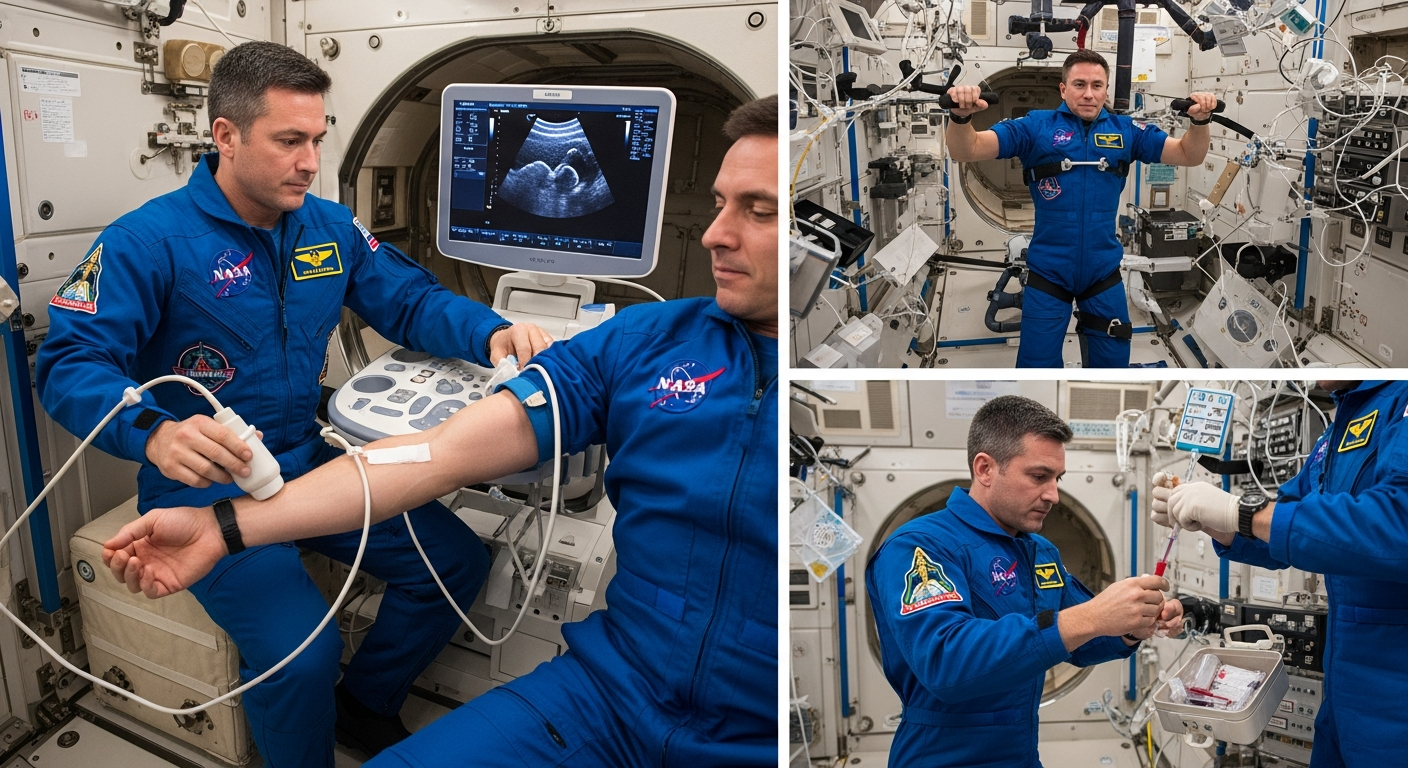
The medical situation highlights the limitations of healthcare in space. While astronauts receive extensive medical training and the ISS is equipped with medical hardware, the capabilities are limited compared to Earth-based facilities.
“We have a very robust suite of medical hardware onboard the International Space Station, but we don’t have the complete amount of hardware that I would have in the emergency department, for example, to complete the workup of a patient,” Dr. Polk explained during the press conference.
Impact on ISS Operations
Following the departure of Crew-11, the ISS will continue operations with a reduced crew of just three astronauts. NASA is considering moving up the launch date of the subsequent Crew-12 mission, currently scheduled for February 15, to ensure adequate staffing of the orbital laboratory.
Looking Forward
NASA has promised to release more details about the timeline for Crew-11’s return within 48 hours of the announcement. Throughout this unprecedented situation, the agency has emphasized that the health and safety of astronauts remains their top priority.
“For over 60 years, NASA has set the standard for safety and security in crewed spaceflight,” Isaacman stated. “In these endeavors, including the 25 years of continuous human presence onboard the International Space Station, the health and well-being of our astronauts is always and will be our highest priority.”


GIPHY App Key not set. Please check settings