

 Thomas Unise
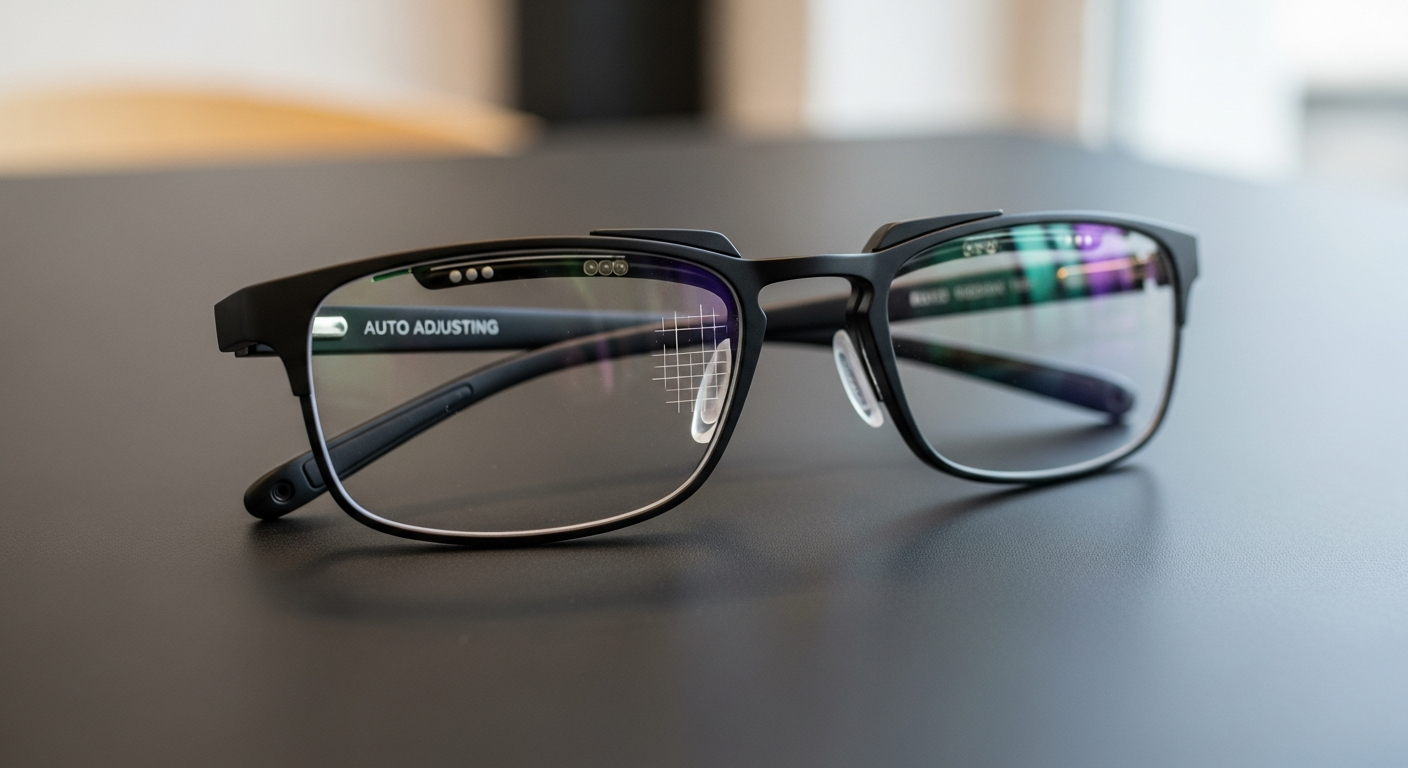
Finnish company IXI is pioneering the future of vision correction with the world’s first automatically adjusting eyeglasses, potentially eliminating the need for prescription updates.
How IXI’s Dynamic Lenses Work
Unlike traditional bifocals or progressive lenses, IXI’s technology uses liquid crystal lenses that automatically transform to accommodate the user’s required focal length. The innovative system employs tiny LEDs that project invisible infrared light into the wearer’s eyes, while photodiodes within the frame track eye movement and focus.
This technology converts reflection data into electrical signals that control the liquid crystals, effectively creating a reading area for near vision that completely disappears when looking at distant objects – a significant advancement over the fixed prescriptions of conventional eyewear.
A Long-Awaited Innovation
According to IXI CEO Niko Eiden, the eyewear industry has seen little innovation in vision correction since progressive lenses were developed in 1950s Germany. “Maybe 10, 15 years from now people will be wondering, how did we wear those fixed focus glasses in the old days?” Eiden told CNN.
The company has secured substantial investment, including backing from Amazon, with total funding exceeding $36.5 billion. While an exact release date hasn’t been announced, Eiden indicated the glasses would launch sometime next year, with a waiting list already available on the company’s website.
Competition in the Dynamic Lens Market
IXI isn’t alone in pursuing this technology. Japanese companies Elcyo and ViXion are also developing similar products. ViXion already sells autofocus glasses, though their design is notably bulkier, requiring users to look through small apertures for the technology to function. In contrast, IXI’s glasses maintain the appearance of ordinary eyewear.
Potential Drawbacks
Despite their revolutionary potential, IXI glasses come with some limitations. They require regular charging alongside other electronic devices, and if the battery dies, they revert to a basic prescription. Additionally, these high-tech glasses will likely command premium prices and may prove more difficult to repair or replace than traditional eyewear – a significant consideration for consumers wary of adding another maintenance-heavy gadget to their lives.



GIPHY App Key not set. Please check settings